




A compressor is one of the most important machines in any industrial plant. The machine plays a significant role in processes such as the production process, machinery operation, and energy supply. Talking about the compressor shaft, it keeps rotating continuously to release rotational motion & torque to the compressor’s rotor that enables the compression of fluids such as air or gas.
But like all machines, the compression shaft also gets damaged over time and needs repair or complete replacement. In such situations, you need to either grind or replace the shaft to keep the process efficient for a long time. Now, the question is how to do so? What are the key factors you must know for compressor shaft grinding and restoration? In this blog, we will discuss everything, so read till the end.
Understanding Compressor Shaft Damage and Wear
Before everything, understanding the damage and wear of the compressor shaft is essential. This will help you understand the exact steps required. Here are some of the common reasons for shaft damage:
- Friction: Constant friction on the compressor shaft surface causes scratches or cuts.
- Misalignment: Misalignment of the shaft & bearing causes uneven pressure on the compressor, damaging the operation wholly. This may also damage the shaft on either side, further misbalancing the torque or drastically reducing the efficiency.
- Overloading: Regular overloading of the shaft can damage the compressor shaft. Make sure to limit the weight on it for maximum efficiency & lifetime.
- Corrosion: Moisture or poor lubrication weakens the shaft surface and can even damage it. This highly affects the overall efficiency of the compressor.
When to Consider Shaft Restoration vs Replacement?
Time to Shaft Restoration:
- When there is only surface wear or scratches.
- If the shaft diameter or shape is slightly deformed, but the structure is still strong.
- When the machine needs to be restarted quickly and a new shaft will take longer to arrive.
- To save cost, since restoration is 40–60% cheaper than buying a new shaft.
- When the material and basic strength of the shaft are still intact.
Time to Shaft Replacement:
- When the shaft has deep cracks or fractures.
- If the shaft material has become weak and restoration cannot ensure safety.
- When the shaft keeps failing repeatedly, even after multiple repairs.
- In high-pressure or critical applications, where 100% safety and reliable performance are required.
- If the shaft design is outdated and a new one can improve efficiency.
Essential Tools and Equipment for Compressor Shaft Grinding
Here are the tools and equipment essential for Compressor Shaft Grinding–
- Cylindrical Grinding Machine:
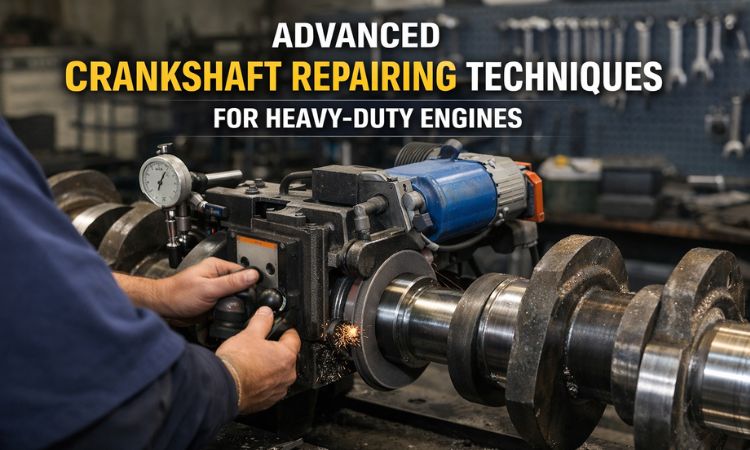
A cylindrical grinding machine makes the shaft surface uniform, round, and smooth, giving it a perfect shape without scratches & wear.
- Measuring Instruments:
Instruments such as micrometer, dial gauge, and vernier caliper help you for measuring the shaft specifications for surface accuracy.
- Balancing Machine:
A balancing machine helps check the balance of the shaft after grinding. This inspects whether the shaft is vibrating during the operation or not.
- Surface Finish Tools:
Surface finish tools make the shaft surface stronger, smoother, and polished, minimising the friction for a long time.
- Protective Gear:
Always use protective gears such as Goggles, Ear Protection, Gloves, etc. They keep you safe during the whole restoration process.
Step-by-Step Compressor Shaft Grinding Process
Here is the step-by-step shaft grinding process-
- Step 1- Inspection:
Inspect the surface shaft to find the cracks, scratches, rust, and misalignments.
- Step 2- Measurement:
Measure the diameter and tolerance with a micrometer and gauge to check the straightness, runout, and ovality, and decide the exact grinding level.
- Step 3- Grinding:
Now, it’s time for grinding. Proper grinding of the shaft surface will make it even and of the right dimensions.
- Step 4- Polishing:
Use an emery strip or buffing tool to make the surface of the shaft smooth, have a better finish, and enhance performance.
- Step 5- Heat Treatment:
Treat your shaft with high heat to increase its strength and remove the grinding stress.
- Step 6- Final Inspection:
Finally, check all the dimensions, balance, surface finish, and runout of the shaft. Ensure everything is according to your requirements and the shaft is ready for installation.
Quality Control and Precision Measurement
Here are the key quality control checks and precision compressor repair measurements that you need to grind the compressor shaft.
- Dimensional Check: Check all the dimensions, runout, and quality with a micrometer and dial gauge like tools.
- Surface Quality: Check the surface quality of the shaft. The shaft surface should neither be too rough nor too smooth.
- Crack/Hardness Test: Check the material’s hardness to check for cracks or weakness.
Cost Analysis: Restoration vs New Shaft Purchase:
Cost of restoration:
- The direct cost of compressor repair is about 40-60% less than that of a new shaft.
- Reduced downtime means less machine downtime, reducing production losses.
- Restoration reduces transport and installation costs.
Cost of new shaft:
- The entire cost of a new shaft purchase price is often very high.
- Replacement takes more time to fit, which increases production losses.
- There are additional costs for shipping, handling, and installation.
Common Mistakes to Avoid During Restoration
Here are the common mistakes you must avoid during Restoration-
- Not doing proper inspection increases the chances of damaging the shaft after grinding.
- Using improper measuring tools gives us wrong measurements that directly affect the grinding procedure.
- Hiring an inexperienced technician affects the quality & efficiency of the shaft.
- Skipping testing to save time can lead to huge losses and increase the chances of failure afterwards.
Maintenance Tips to Extend Shaft Life
Here are the maintenance tips that help you extend shaft life-
- Clean it regularly to increase the life of the shaft.
- Properly lubricate the shaft regularly to reduce friction and wear.
- Keep the machine properly aligned to prevent extra pressure on the shaft.
- Do not run the shaft beyond the prescribed capacity to prevent overloading.
- Inspect the vibration and balance of the shaft regularly, hiring an experienced technician.
- As soon as initial scratches or wear appear, get it repaired immediately instead of avoiding it.
- Use high-quality and popular brand bearings and parts in the shaft.
- Keep the shaft protected from moisture and rust. This extends its life.
Conclusion
Compressor shaft grinding and restoration save time and cost in industries. Regular grinding and restoration ensure the longevity of the compressor and the highest efficiency of the overall process. But for shaft grinding & restoration, you must follow the best practices of compressor repair & restoration to make the process positive and fruitful. In this blog, we have discussed practices such as inspecting the shaft, choosing the right equipment, hiring an expert technician from leading firms like MPA Power Projects, etc. Follow all of them and restore your compressor shaft for the best results.



No Comments