



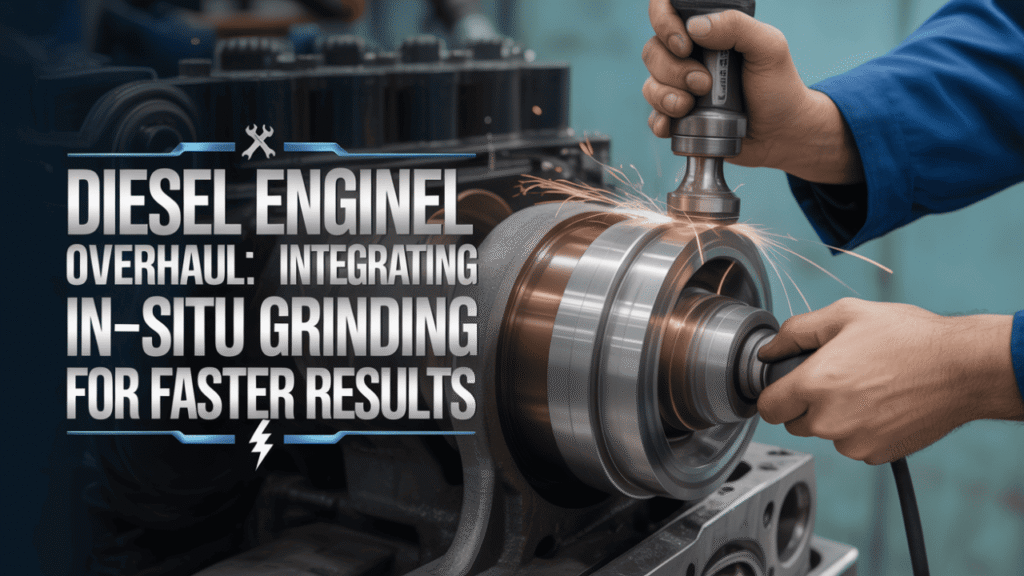
Diesel engines are a part of manufacturing, logistics, and several other industries. This makes them one of the most versatile and effective machines. But what happens when the whole system goes through a breakdown?
The whole process stops and waits for the recovery that often takes weeks. But what if there’s a faster way with more efficiency? In this blog, we will discuss the fastest way and how it works.
Introduction to Diesel Engine Overhaul Challenges:
Diesel engines have always been a promising partner to manufacturing and machinery industries. You can imagine its heavy usage everywhere such as trucks, ships, generators, and heavy machinery. They produce heavy results but also wear out soon if not cared for properly and repaired periodically. But the traditional diesel engine overhauls take weeks or months. Why?
The engineers dismantle the engine, ship parts to a shop, grind them, and reassemble. Then comes transporting them back to the unit and assembling them. This downtime kills your profits, especially when you work in logistics or shipping. The transportation risk is another big challenge for all industries with such machinery.
Here comes the In-Situ Grinding – This is an on-site advanced repairing technique to fix the cylinder liners without full disassembly. The results?
- Less downtime
- High cost savings.
Here’s a summary of all the challenges you may face:
- More repairing timeline.
- Brutal traditional process.
- Heavy losses in Logistics
- Huge losses in Shipping.
- Terminate all procedures while repairing.
What Is In-Situ Grinding and How It Works?
In-situ grinding happens right where the engine sits. You don’t need to remove the cylinder head, block, or any other equipment. So how do things work? Technicians use portable grinding machines that are inserted into the cylinder liner. These tools spin at high speeds with diamond abrasives. Results? They hone the surface and remove wear, scoring, or glazing.
But before everything, the process starts with inspection by using a borescope. The technicians use the tool to check for damage and then align the machine precisely with laser guides.
The In-situ grinding works in stages – rough cut, finish cut, and honing. This prepares the hone for a perfect seal. Next, coolants are used to flush the debris.
This whole process takes only a few hours. It’s like giving your engine a quick spa day without surgery.
Benefits of Integrating In-Situ Grinding in Overhauls:
- Reduced Downtime
One of the most important benefits of using In-situ grinding is its speed. While traditional methods take 4-6 weeks of downtime for disassembly and shipping, In-situ grinding fixes the liners or minor damages on-site in a few hours. Results? All the operations restart quickly, and the trucks, ships, or generators stay running longer. This keeps the revenue flowing without costly delays.
- Major Cost Savings
Disassembling and transportation costs you heavily, and In-situ directly cuts this. Results? This saves big on expenses and skips expenses such as crane rentals, part transport, and storage fees. Also, the labour costs drop as fewer mechanics work for shorter hours. Results?
- Restored liners,
- Longer lifespan, and
- Stretched time between overhauls.
Overall, you have the potential to cut overhaul budgets by 50% or more.
- Superior Quality and Performance
Precise in-situ grinding boosts your engine quality as well. But the grinding must be precise and properly handled by an experienced technician. Precise grinding creates even cylinder walls that provide a better piston seal and compression. Results? You get improved fuel efficiency by 10-15%, cuts emissions, and provides a smooth run and fewer vibrations.
- Versatility Across Applications
In-situ grinding is suitable for most of the diesel setup. Whether you work with marine engines, industrial generators, trucks, or heavy equipment, these are perfect for on-site jobs in tight spaces.
- Eco-Friendly Operations
In-situ grinding reduces waste and provides greener results. It directly affects fuel usage and emissions. Results? Green certifications or dodging carbon taxes.
Step-by-Step Process for In-Situ Grinding During Overhaul:
Here is a step-by-step process for in-situ grinding for overhaul:
- Assess and Prep:
Inspect the cylinders with a borescope. Clean the engines, remove pistons, and keep the block in place.
- Machine Setup:
Next, insert the portable grinder and use alignment tools for accuracy within microns.
- Grind in Phases:
Apply a rough grind to remove the damage. Next, finish with fine honing for mirror-smooth walls.
- Measure and Test:
Next, check the tolerances with gauges and run a leak-down test.
- Reassemble and Run-In:
Finally, install rings and pistons. Break in the engine under load.
Best Practices for Safe and Effective Implementation:
- Choose only OEM-approved grinders.
- Monitor the vibrations and heat during grinding.
- Use proper PPE such as respirators, gloves, ear protection, etc.
- Ventilate the area to handle dust.
- Oiling post-grind to ensure no metal particles.
- Avoid in-situ grinding if liners are cracked over 0.2 mm.
- Partner with reputed service providers such as MPA Power Project.
- Keep safety at first.
Conclusion:
In-situ grinding has revolutionised diesel engine overhauls and made them faster, cheaper, and more reliable than ever. Now, coming to traditional grinding methods, they are essential even today, but only for heavy breakdowns and cracks over 0.2 mm. In such cases, avoid the on-site in-situ grinding. But in all other cases, MPA Power Project in-situ grinding offers an unbeatable speed and efficiency for your unit.
FAQs:
- What is in-situ grinding for diesel engines?
In-situ grinding for diesel engines refers to cylinder liner refining using portable tools. This process doesn’t need a full disassembly and saves you from transportation and labour costs as well.
- How does in-situ grinding speed up engine overhauls?
In-situ grinding process fixes the liner issues only in a few hours compared to traditional methods, where it usually takes weeks.
- What are the main benefits of in-situ grinding over traditional methods?
Less downtime, cost savings, improved ROI, higher efficiency, and lower emissions – these are some of the top benefits of using In-Situ grinding over traditional methods.
- Is in-situ grinding suitable for all diesel engine types?
Yes, In-situ grinding suits all kinds of diesel engine types but in case of severe damages or small engines, you must inspect first and if needed, choose traditional grinding methods.


No Comments