




The process of removing the shaft from the machine, sending it to the workshop for repair, and installation is lengthy, time taking, and costly. This causes production disruptions and impacts industry revenue because you can’t run your operations while the repair.
On the contrary, on-site rotor shaft grinding saves manpower, transportation, dismantling, and reassembly costs, and helps generate more revenue. But how does all this happen?
In this blog, you will discuss on-site rotor shaft grinding, how it saves costs in Poyour, Cement and Marine Plants in detail.
What is Onsite Rotor Shaft Grinding?
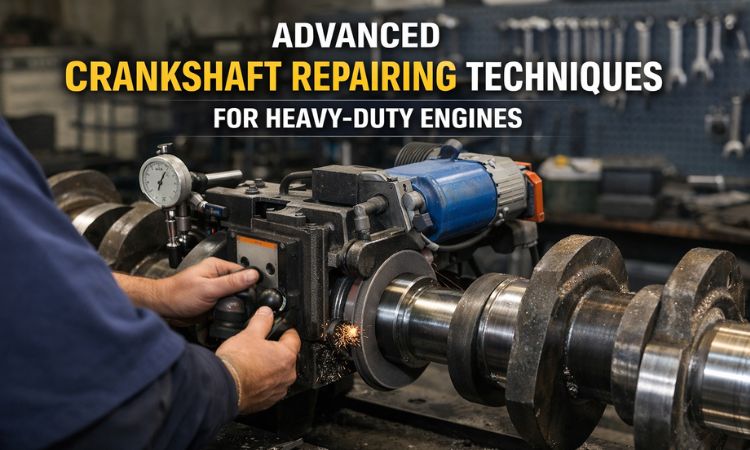
On-site rotor shaft grinding is a modern technology that allows factories to grind and restore the shaft while it is in place or without dismantling it. On-site grinding uses high-pressure grinding machines that are portable and can be used at the factories only.
On-site rotor shaft grinding works with minute-level accuracy. It corrects the shaft defects such as scoring, ovality, and taper. Notably, its operations are much faster and higher-quality than traditional router shafts.
The Traditional Approach: Why Offsite Grinding is Expensive?
The off-site grinding process requires stopping the machine and dismantling the rotor assembly. This process incurs various costs, including crane charges, transportation, and handling of heavy equipment. Labor costs are also high. Exporting the shaft abroad results in long downtimes, reducing revenue and increasing losses.
Cost Saving Factor 1: Eliminating Equipment Disassembly and Removal
In onsite grinding, you can repair the shaft while keeping it in its place. This eliminates disassembly costs. Additionally, onsite service eliminates the cost of removing heavy rotors and turbines, and significantly reduces maintenance costs.
Cost Saving Factor 2: Dramatic Reduction in Downtime
In on-site grinding, you can operate the machine in a few hours. This helps to reduce downtime. This also allows for quicker production. In highly time-sensitive industries, you can perform on-site work in 24/7 shifts. This significantly speeds up work.
Cost Saving Factor 3: No Transportation and Logistics Expenses
Transporting shafts from the site to the workshop incurs significant transportation costs. Moving heavy equipment also involves significant risks. In contrast, onsite grinding eliminates transportation costs and prevents machine damage. You can call a technician to repair the machine on-site. This is beneficial for machine safety.
Cost Saving Factor 4: Reduced Labor and Overhead Costs
On-site grinding reduces labor and overhead costs compared to off-site repairs. This process is faster and saves many unnecessary expenses. Manpower and administrative costs are eliminated.
Cost Saving Factor 5: Avoiding Production Loss and Revenue Impact
Prolonged machine outages result in production losses. This directly impacts revenue during workshop repairs. If you talk about machine malfunction, on-site grinding reduces machine downtime. In this process, you can call technicians quickly to repair it. This saves industries millions in losses.
Application in Power Plants: Turbine and Generator Shaft Grinding
In the Power Plants, you see that turbine and generator shafts play a vital role. Because of their shut down, they cause losses. In contrast, onsite grinding allows us to repair heavy rotors without removing them. This also improves machine performance.
Application in Cement Plants: Mill and Crusher Shaft Maintenance
The shafts used in cement plants, including kiln and crusher shafts, wear quickly due to heavy loads and exposure to dust. Sending them to the workshop costs us both time and money, but onsite grinding avoids this problem because correcting their geometry is easier.
Application in Marine Plants: Ship Propeller and Engine Shaft Repair
The propellers and engine shafts used in marine plants are very large, making them difficult to transport to the workshop repeatedly. On-site grinding allows us to repair them onboard, significantly saving us the cost of dry docking. you also use it to restore lifeline ship equipment.
The On-Site Grinding Process: Technology and Equipment Used
In the onsite grinding process, you use portable, high-precision grinding machines. You can also utilize advanced vibration analysis and in-situ measurement tools. These machines also offer you customization to suit shafts of varying diameters and lengths while observing safety standards.
Quality and Precision: Addressing Common Concerns
Modern on-site grinding provides you with similar quality as a workshop. How? Here are some of the major common concerns from the industries:
- Vibration & Chattering:
Modern on-site grinding comes with high-precision spindle systems and vibration-damping technologies. This minimises the chatter and vibrations.
- Heat Generation:
On-site grinding equipment uses effective coolant delivery systems. This controls the buildup and prevents thermal damages to the workplace.
- Dimensional Accuracy:
Laser-based measurements allow for real-time feedback on dimensional deviations. This allows instant correction even at micron level.
- Minimising Surface Defects:
On-site grinding machines offer adaptive controls that optimise feed rate, wheel speed, and pressure based on real-time measurements. This eliminates common surface defects such as feed marks, wheel loading, and scratching.
ROI Analysis: Break-Even and Long-Term Benefits
The ROI of onsite grinding is very strong and offers unmatched returns. With its help, you can reduce downtime, logistics, and manpower costs together. It also extends equipment life, significantly reducing maintenance frequency.
Selecting the Right Onsite Grinding Service Partner
To select the right onsite grinding service partner, consider the following factors:
- You must choose a service partner who has trained technicians and certified engineers in the company.
- The service partner should also provide 24/7 on-site support including emergency breakdown services.
- Select an on-site grinding service partner after studying customer reviews and previous projects.
- Finally, deal with a company that uses high-quality portable grinding machines and modern MAP equipment.
Conclusion
On-site rotor shaft grinding is a smart and cost-saving solution in the current industry. It reduces the lengthy repair process compared to traditional methods and prevents weeks of downtime. It is especially important in the power plant, cement, and marine sectors as it saves unnecessary expenses and increases revenue for these industries.
FAQs
- How much downtime can onsite rotor shaft grinding save compared to offsite repair?
With on-site grinding, you can have machines repaired on-site by calling a technician instead of sending them to a workshop. This saves transportation and manpower costs. It reduces the time required for off-site grinding by 1-3 weeks and reduces the cost to just a few hours.
- What is the average cost savings percentage with onsite grinding versus traditional methods?
On-site grinding reduces the average cost by 40 to 70% compared to traditional methods. There’s no need to dismantle the machine, which also saves overhead costs.
- Can onsite grinding achieve the same tolerances and surface finish as workshop grinding?
Yes, on-site grinding machines come with modern features that are portable. They provide workshop-level precision.
- What size rotor shafts can be ground onsite?
You can perform on-site grinding on shafts ranging from 50 mm in diameter to several meters in length.
- Is on-site rotor shaft grinding safe to perform in operational industrial environments?
Yes, onsite rotor shaft grinding is completely safe. Certified equipment and trained technicians must be used.



No Comments