




In the power plants, thermal power stations, oil and gas industry, refinery plants, the mining industry, and heavy manufacturing units, where shutting down or removing machinery is expensive, and repairs are necessary, we utilize in-situ services.
Although the traditional repair method is still effective and needed, this requires transporting the machines away from the site or workshop. On the contrary, in-situ services are modern and repair several damages and misalignments at the site itself, saving both time and cost.
Here, we will discuss 2026 rise of In-situ Services in detail.
An Overview of In-Situ Services in 2026
In-situ services have become essential for industrial maintenance. With these services, any power plant maintenance team can repair machines on-site instead of taking them to a workshop. Results?
Moving the machine increases downtime and halts production for minimal time.
Notably, in-situ services are playing a significant role in resuming production quickly in 2026 and becoming a part of first-line maintenance system. This helps avoid lengthy scheduling and long hold on production, directly impacting the efficiency of the plant. Results? Utilising in-situ grinding It has brought flexibility to industrial operations, promoting growth and production line continuity.
What Are In-Situ Services and How Do They Work?
In-situ services refers to utilising modern tools and measurement methods to repair and maintain the manufacturing system at the site instead of removing the parts and transporting them to designated repair centres.
Here are the steps through which you can understand their entire working process-
Step 1: On-Site Inspection and Assessment
First, thoroughly inspect the machine to identify damage and proper alignment. Record the condition of the crankshaft or parts. This will help you determine whether in-situ repair is possible.
Step 2: Measurement and Diagnosis
Use digital micrometers and gauges for measurement and diagnosis. You can also take precise measurements with a laser alignment system. By checking for out-of-round and taper, you can determine the extent of correction.
Step 3: Machine Preparation and Safety Setup
Now, securely lock the machine and clean the workshop. You can secure it by using safety barricades and PPE. This helps prevent vibration and movement.
Step 4: Installation of Portable In-Situ Equipment
After this, fit the portable grinding or machining unit. Now align the equipment with the shaft or crankshaft. During this, pay attention to centering and balancing and double-check all settings.
Step 5: Grinding Operation
After installing the portable in-situ equipment, slowly begin material removal. This ensures a controlled and precise cut. This allows you to easily ensure a smooth surface finish.
Step 6: Polishing and Finishing
After In-situ Grinding of Crankshaft, perform polishing. This makes it easier to create a smooth and uniform surface. It also reduces friction.
Step 7: Final Inspection and Testing
The final inspection and testing process involves checking final dimensions and alignment. This includes measuring vibration and run-out and running the machine on a trial run.
The Traditional Full Overhaul Process: Pros, Cons, and Costs:
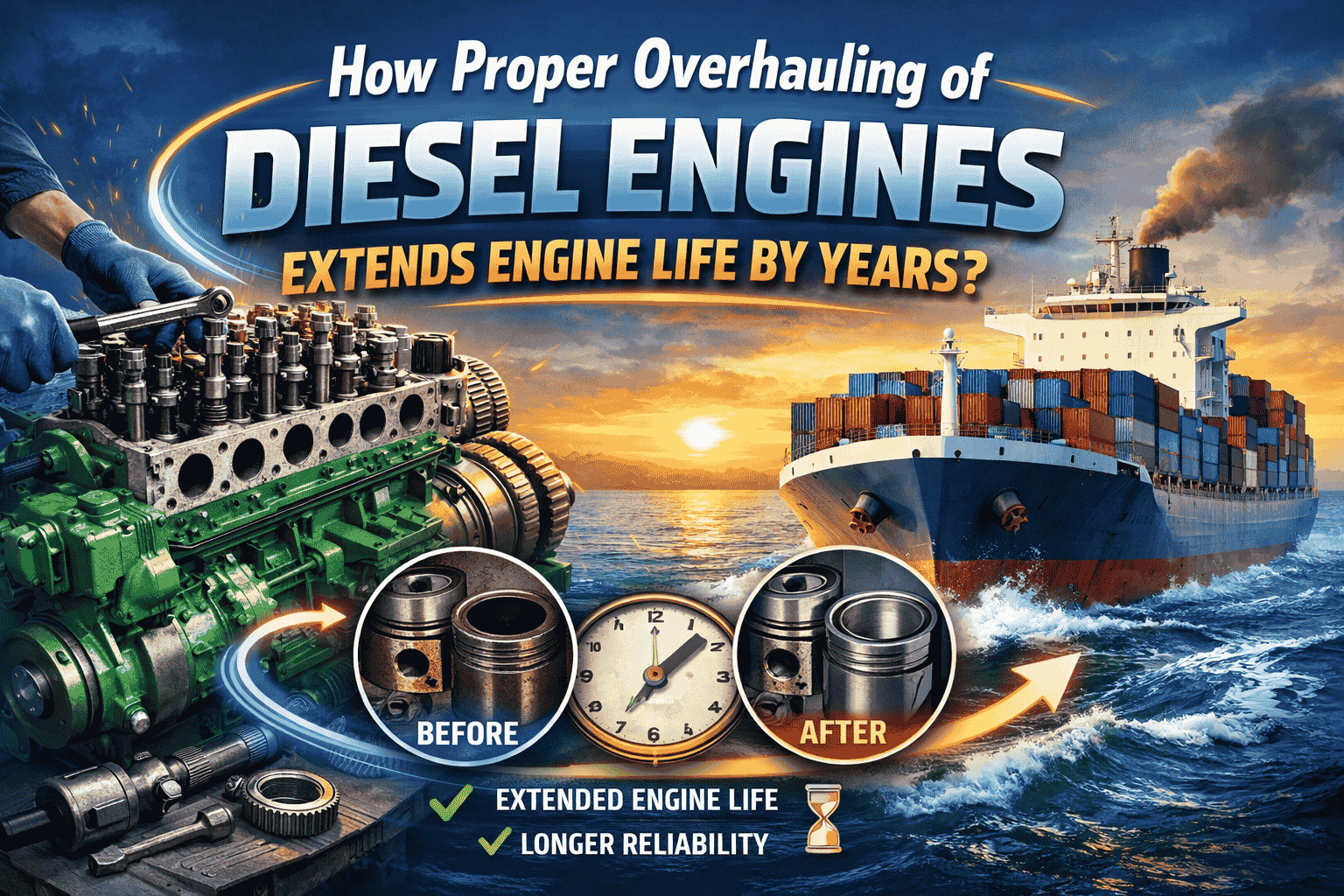
In the traditional full overhaul process, the machine or engine has to be completely disassembled for repair. This involves transporting the machine from the unit to the workshop.
After the machine is moved, each part is properly inspected. Damaged or worn-out parts are then replaced. This process is time-consuming, but after servicing, the machine becomes as good as new.
Pros:
- A full overhaul can restore the machine’s overall health.
- It thoroughly inspects all critical parts and replaces them if necessary.
- A full overhaul extends the machine’s life. This provides long-term reliability.
- A full overhaul is the best option if the machine is severely damaged or is very old. This restores the machine to its pristine condition after servicing.
Cons:
- A full overhaul increases downtime. This process involves disassembling and repairing the machine, which takes a considerable amount of time.
- Transporting the machine from the site to the repair facility and reassembling it can take several weeks. This halts work at the site.
- With a full overhaul, you face a higher risk of production losses.
Costs:
A full overhaul involves higher costs due to the need to disassemble the machine. This includes additional expenses for dismantling, transportation, workshop machining, spare parts, and more.
Key Technologies Driving the In-Situ Revolution:
Here are the key technologies that drive the In-situ revolution-
1. Portable In-situ Machining and Grinding Technology:
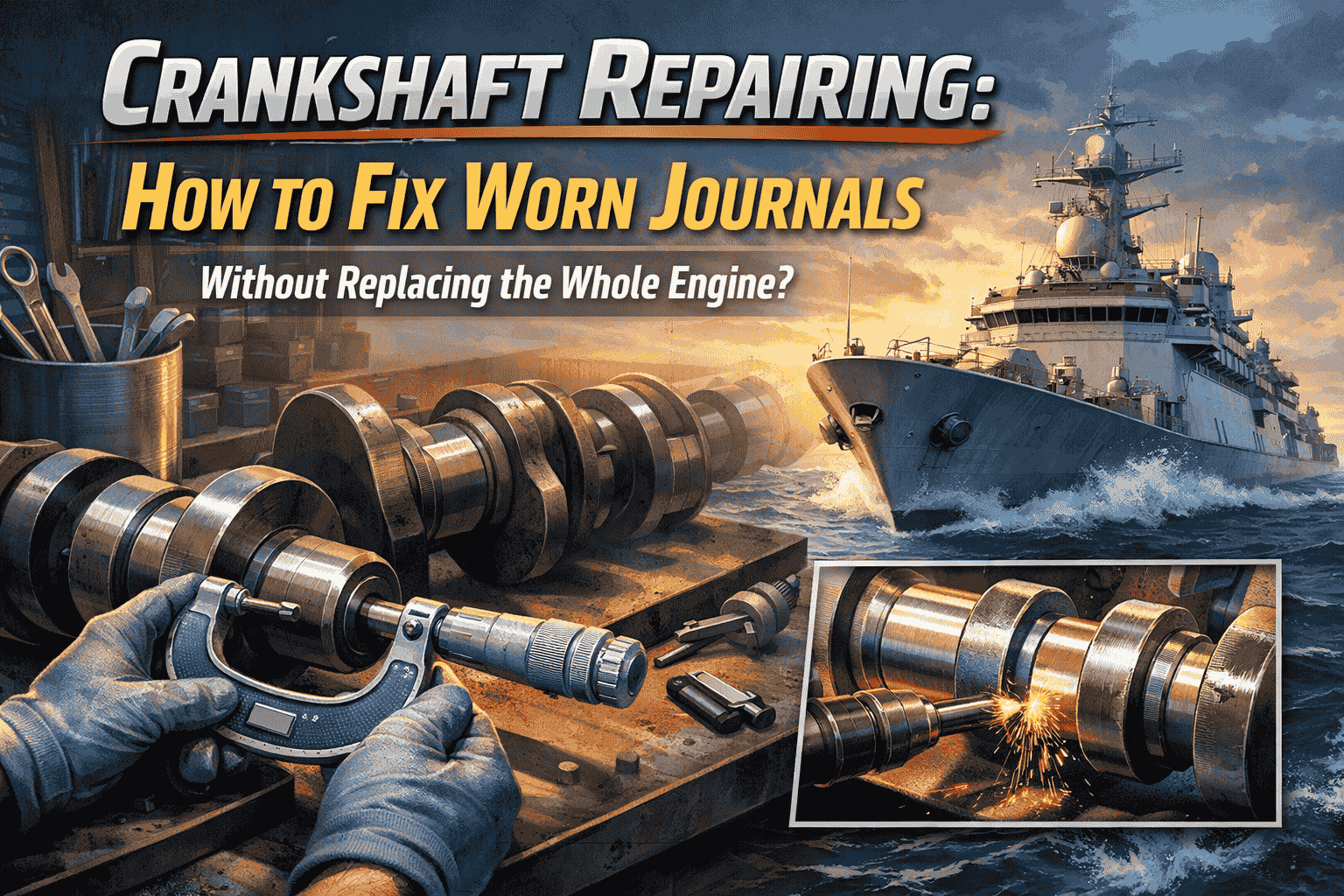
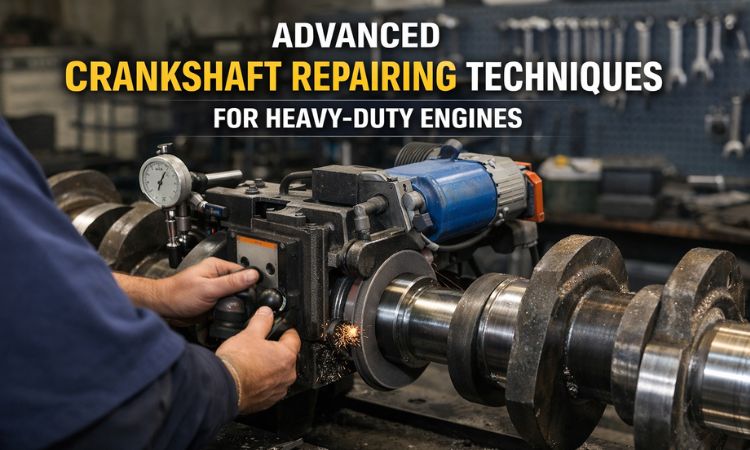
This technique allows you to repair crankshafts, shafts, and bearing seats on-site using portable in-situ machining and grinding equipment. These machines are lightweight, making installation easy.
2. Laser Alignment Technology:
Laser alignment systems provide micron-level accuracy in in-situ services. Through this, you can accurately measure shaft centerlines and run-out. This enhances the quality of in-situ grinding.
3. AI-based Condition Monitoring and Predictive Maintenance Technology:
AI-based condition monitoring and predictive maintenance technology helps you determine when in-situ repairs are needed. This makes in-situ services a safe and cost-effective solution.
Advantages of In-Situ Over Full Overhauls
Here are the advantages of In-situ over Full Overhauls-
- Reducing Downtime:
In-situ repairs significantly reduce downtime compared to a full overhaul. It eliminates the need to remove the machine from the site. This allows you to resume production quickly without extended shutdowns. We use this method for power plants and heavy industries.
- Consuming Less Time and Cost-effective:
A full overhaul is more time-consuming. In-situ repairs save on costs. There are no transportation, workshop, or logistics expenses involved. This makes it cost-effective and helps you stay within your budget.
- More Flexible:
In-situ services offer a more flexible solution compared to a full overhaul. Machine repairs can be performed on demand. It also reduces the risk associated with repeatedly dismantling and reassembling the machine, leading to improved safety.
Limitations and When Full Overhauls Still Win:
Here are the limitations and the reasons you can understand why and when full overhauls still win over In-situ Services-
- In-situ repair is not safe if the machine has severe cracks, excessive metal loss, or structural damage. In such cases, overhauls are the best option.
- Sometimes, in-situ repair is not very effective in older machines or those that have been repaired repeatedly.
- Limited space at the site or poor working conditions of the machine can make in-situ operations challenging. Therefore, you should opt for overhauls.
- A full overhaul is necessary when the machine requires long-term life extension or rebuilding.
Economic Impact: Cost Savings and ROI Analysis
You can analyse the Economic Impact through given points-
- With in-situ services, you can reduce total maintenance costs by 40–60%.
- This is the best option to reduce the cost of machine dismantling and transportation from the site.
- It reduces downtime, allowing you to save significantly on production losses.
- With this service, you avoid workshop charges and additional labor costs for disassembling the machine.
- In-situ services provide a quicker return on investment (ROI), leading to faster growth.
Future Predictions: Replacement or Complementary Role?
In 2026, people are increasingly preferring in-situ services. These services won’t completely replace full overhauls in the future, but they will be mainstream for quick repair solutions for minor maintenance requirements.
It’s important to understand that you cannot choose the same solution for every type of damage. In-situ services are most effective for routine maintenance, emergency repairs, and cases of moderate wear and tear.
Full overhauls are required when there is severe structural damage, cracks, or when a complete rebuild of the machine or crankshaft is necessary. In such cases, taking the machine to a workshop for repair is the safest solution.
How to Prepare Your Operations for In-Situ Adoption?
Here are the points that will help you to prepare your operations for In-situ adoption-
- First, identify the critical machines and equipment.
- Next, begin monitoring the condition of the machines.
- Now, mark the areas where in-situ service is required.
- Choose a reliable in-situ service provider for the in-situ services.
- Now, plan for portable tools and equipment.
- Update the machine’s maintenance schedule.
- Finally, start with a trial run and pilot project.
FAQs:
- What exactly are in-situ services?
In-situ services are repair and maintenance services that repair and maintain various machine components such as shafts, crankshafts, bearing housings, etc at the site only. In-situ services use advanced tools, capable of identifying and repairing micro-misalignment and damages and repair them quickly.
- How much can in-situ services save compared to full overhauls?
In-situ services can save you 40–60% on costs. This eliminates workshop and transportation expenses, and reduces labor costs.
- Which industries are adopting in-situ repairs fastest in 2026?
The power plant industry, marine and shipping sector, oil and gas industry, mining and cement plants, and heavy manufacturing units are among the fastest adopters of in-situ repair in 2026.
- What are the main risks of relying on in-situ maintenance?
In In-situ services, working in confined spaces is difficult. It’s not suitable for severe damage. It requires skilled technicians. It carries higher safety risks.
- When should you choose in-situ over a full overhaul?
When the damage is limited and the work can be done without disassembling the equipment, choose in-situ repair over a full overhaul. You should choose the right option based on the situation and seek advice from a technician.
Conclusion:
In-situ services are getting mainstream, and it’s no surprise that more manufacturing units are choosing it over a complete overhaul. In-situ services save money, time, and maintain production efficiency. Results? More savings and high profits. But is it the future?
In this blog, we have discussed how In-situ services are going to be highly important in the near future. But these are not going to completely replace the traditional overhaul, as they will be needed for completely damaged parts and major damage.



No Comments