




The crankshaft is the heart of an engine and helps the pistons move so the system keeps running without unwanted trouble. Since it works all the time, it needs proper care and attention. These days many engine failures and accidents are reported because people ignore crankshaft maintenance.
When the servicing is avoided for long, the engine slowly starts showing signs like vibration, low oil, overheating, and strange noises. All of these small problems can turn into expensive repairs or even risky accidents if not handled in time. To avoid such situations, crankshaft maintenance is one thing you cannot skip.
What is In-Situ Crankshaft Grinding
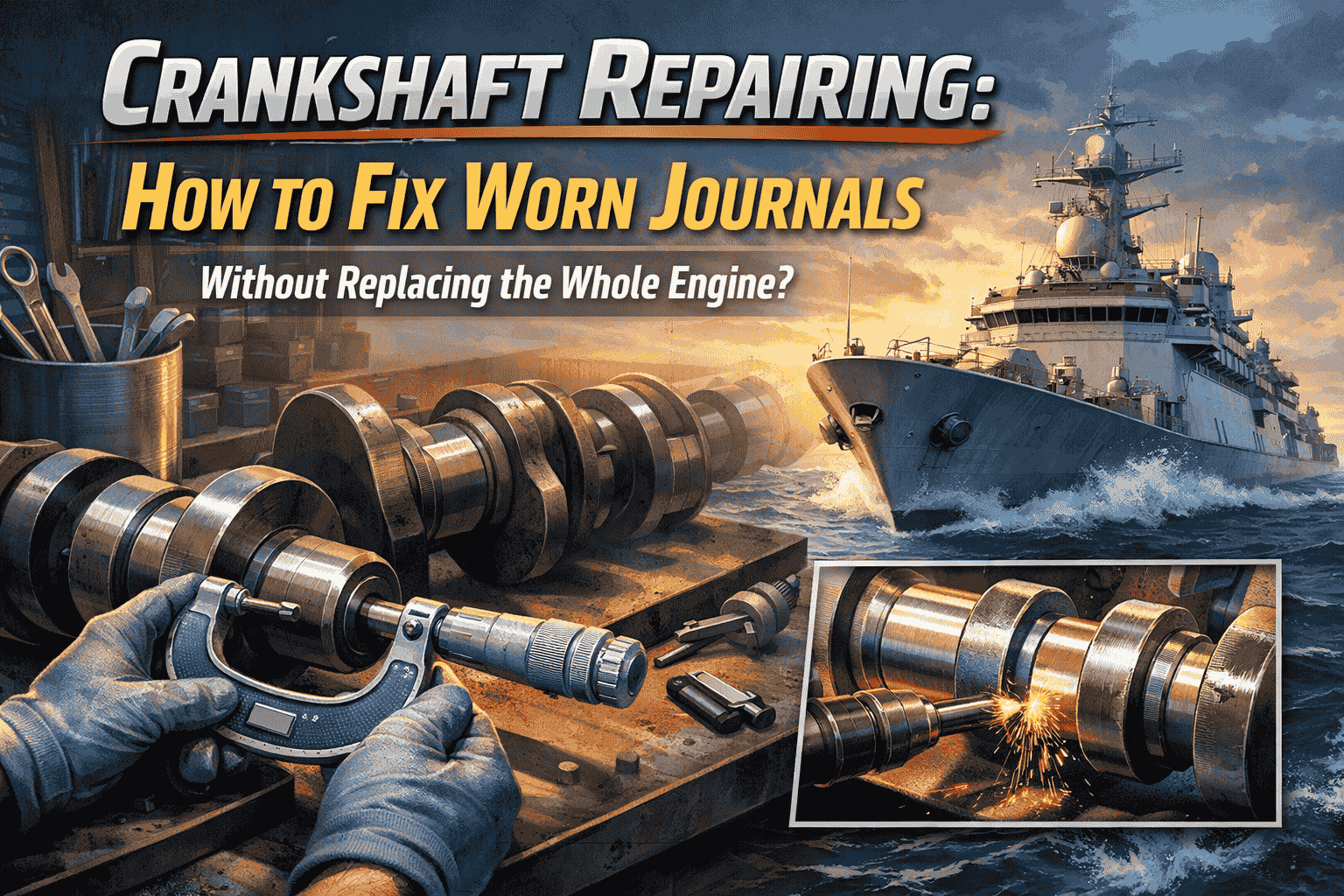
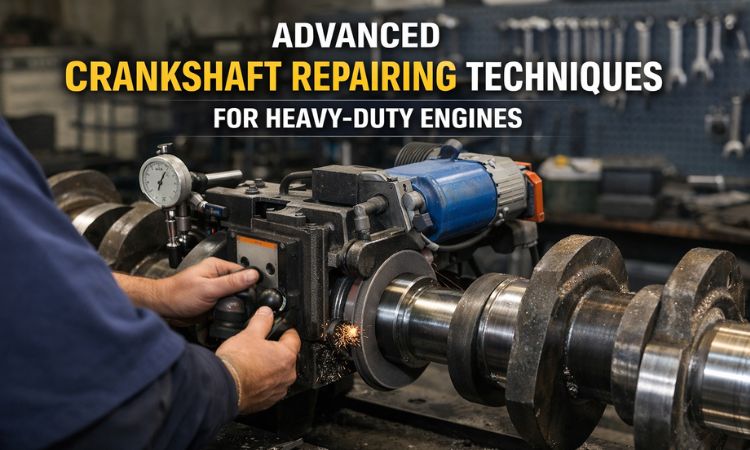
In-situ crankshaft grinding is a repair technique where the crankshaft is corrected without removing it from the engine. A trained technician uses special mechanical tools and focuses only on the damaged spot. Many people think this method is expensive, but it’s actually more useful because the repair takes less time and you don’t have to dismantle the entire engine. The engine stays in place, the crankshaft is worked on directly, and the whole repair becomes faster and easier for industries, generators, and ships.
Traditional vs In-Situ Grinding: Understanding the Difference
I. Traditional Method
This method repairs the crankshaft by removing it from the engine. The entire engine needs to be opened, which takes more labor and more time. It becomes slow, costly, and sometimes involves heavy transportation charges. Normally this method can take up to 7 or 8 days.
II. In-Situ Crankshaft Grinding
Here the crankshaft is repaired without taking it out. Only the problem area is worked on using special portable tools. The method uses less labor, finishes faster, and costs much less. Because of the reduced time and smooth working process, technicians today prefer in-situ grinding for ships, power plants, generators, and automobile engines.
Top 5 Benefits of In-Situ Crankshaft Grinding
Benefit 1: Massive Cost Savings and Reduced Downtime
This method saves a lot of time because the engine is not opened completely. Traditional crankshaft repair needs the engine to be dismantled which automatically increases time and work. In in-situ crankshaft repair, the worker attends the problem area only, which reduces the hard work. The work becomes neat and clean. Also, it takes less time, so industries face less downtime.
Key points:
- No engine dismantling
- No extra transportation charges
- Repairs completed within hours instead of days
- Work stays cleaner and smoother
Benefit 2: No Need for Removing or Transporting the Crankshaft
When in-situ crankshaft repair is done, the crankshaft remains inside the engine and does not move from its original place. This removes the need for transportation. A professional uses specific tools that allow the crankshaft to stay untouched from the movement. This saves transportation time and reduces unwanted costs.
Main advantages:
- Zero transportation risk
- No handling damage
- No movement of heavy machinery
- Saves additional labor
Benefit 3: High Precision and Quality in Real Working Environment
Here the crankshaft is repaired in its real position. Because it’s not removed, chances of misalignment become low. The special grinding tools offer better accuracy. Each technician who performs in-situ grinding is trained, so the work becomes smooth. Once the job is done, the crankshaft gives a smooth base and the engine works longer. It is also better to service the engine after one month.
Why it improves quality:
- Crankshaft stays aligned
- Precision grinding tools
- Experienced technicians
- Better long-term engine performance
Benefit 4: Extended Engine Life and Better Performance
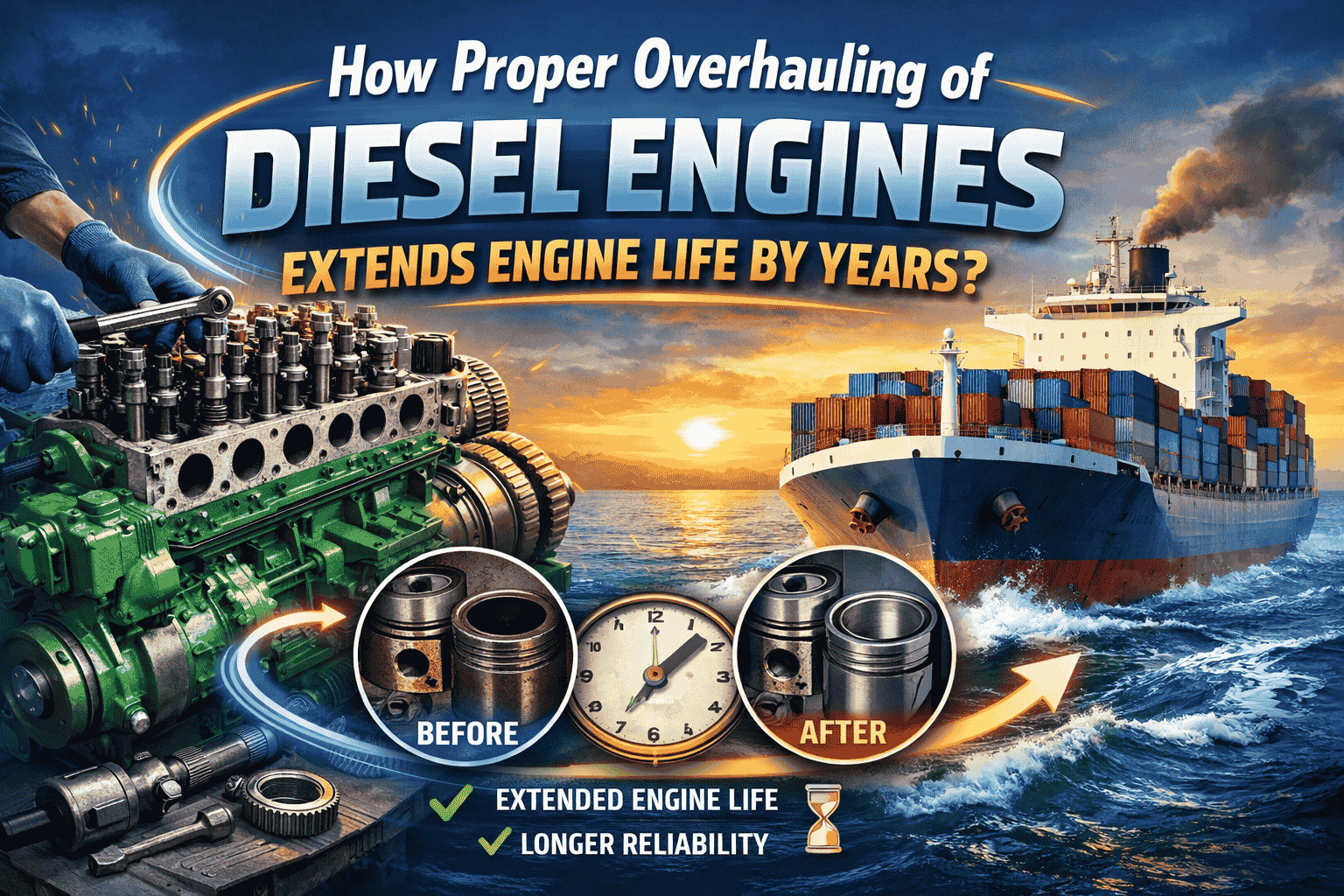
This method increases the engine’s working life. In-situ crankshaft grinding avoids big repairs, increases sustainability, and improves engine health. When the crankshaft is in good condition, the pistons move smoothly. The engine produces less vibration and less heat, which leads to better performance.
Helps improve:
- Engine vibration issues
- Overheating and friction
- Noise reduction
- Long-term durability
Benefit 5: Minimal Disruption to Industrial or Marine Operations
In-situ crankshaft grinding is one of the safest and easiest ways to improve engine health with minimal disturbance. Only the crankshaft area is handled and the rest of the engine stays stable. Factories, ships, and big industries don’t need to stop their entire setup.
Operational benefits:
- No system shutdown
- Work continues smoothly
- No production loss
- Very little disturbance to other engine parts
The In-Situ Grinding Process: How It Works
The complete repair process includes:
- Detailed inspection to detect damage
- Setting up the grinding tool around the crankshaft
- Proper alignment check
- Grinding away thin layers for correction
- Cleaning and testing the surface
All of this is done without removing the engine, and most tasks finish within a few working hours.
Applications in Power Plants: Diesel Generator Maintenance
Diesel generators are used when there is no power. These heavy-duty machines work continuously, which makes crankshaft maintenance important. In power plants, shutting down the system is not possible because it affects electricity supply.
Common issues solved by in-situ grinding:
- Crankshaft damage
- Excessive vibration
- Smoke and strange noise
- Liner damage
Power plants save time and prevent energy loss because the system does not stop during repair.
Applications in Marine Vessels: Ship Engine Repair
Ship engines run for very long hours in rough conditions. They need regular crankshaft maintenance. In-situ crankshaft grinding is suitable for ships because these engines are too large to remove.
Technicians use specific tools that allow repairs while the ship continues sailing. The work finishes within a few hours and does not affect the journey.
Marine benefits:
- No need for engine removal
- Ship continues operating
- Avoids delay in voyages
- Saves dry dock charges
Safety Considerations and Quality Standards
In-situ crankshaft grinding needs trained technicians. They follow safety standards and check each part in detail. The inspection includes:
- Checking for fuel leakage
- Removing loose parts
- Identifying sparks or electrical risks
- Ensuring smooth finishing after service
The sign of good work shows in reduced vibration and improved engine performance.
Cost-Benefit Analysis and Real Cases
In-situ crankshaft grinding saves a big amount of money. Traditional methods require transportation, engine opening, and several days of work.
Typical savings:
- Power plants save 5 to 10 lakh
- Ships save 30 to 50 lakh in dry dock charges
- Industries avoid production loss
Case Study 1: Mr. Mehta
Mr. Mehta repaired his factory machine the traditional way. He stopped work for 2 to 3 days. This shutdown caused big financial losses of 4 to 5 lakh per day. The repair cost itself was around 6 lakh. Later he learned about in-situ crankshaft grinding and now faces no losses. His profit increased due to reduced downtime.
Case Study 2: Cargo Ship Company
A cargo ship company repairs their crankshaft with in-situ grinding and saves 30 to 50 lakh by avoiding dry docking.
Choosing the Right In-Situ Grinding Service Provider
In-situ grinding needs proper skill. A good company should have:
- Trained technicians
- Good experience in crankshaft repair
- Proper safety awareness
- Best portable tools
- A strong service background
Choosing the right team ensures safe and accurate crankshaft maintenance.
Future of Crankshaft Maintenance Technology
In the coming years, machines will become more advanced. In-situ crankshaft grinding will also improve with automation. New tools will complete grinding faster. AI systems will detect even the smallest errors. Less metal wastage will make the process more environment friendly.
Conclusion
In-situ crankshaft repairing saves time, money, and unnecessary effort without affecting the entire engine’s working system. This method increases the engine lifespan and reduces the chances of major breakdowns. Skilled technicians ensure safety, accuracy, and high-quality results.
For reliable and fast in-situ crankshaft grinding services, MPA Power Project is the team you can trust.



No Comments