




Marine and industrial engine failures are common and disrupt operations badly. The diesel engines face an 85% fault incidence rate in marine power systems, whereas the total number of marine engine failures has doubled in recent years due to harder workloads and fuel quality issues.
The results? Downtime, repair expenses, and lost revenue in shipping and power plants. But, now the industries have an alternative to repair of marine and industrial engines that can save their money, reduce downtime, and eliminate the shipping cost completely. In this blog, we will discuss the 10 marine engine failures and their on-site Repair methods.
Why Onsite Repair of Marine and Industrial Engines Is a Game-Changer?
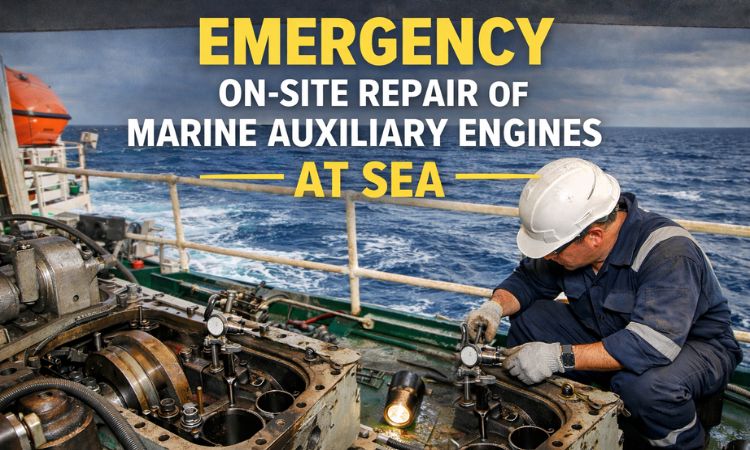
On-site marine repair of marine and industrial engines method minimises downtime because it has no need to dismantle the whole structure. Instead, engineers use portable tools to fix issues without full disassembly.
This results in minimised downtime and restoring engines as new within just 10-12 hours. This helps ships avoid dry-docking and industrial plants stay operational with minimum downtime.
Notably, regular maintenance and onsite repair methods can cut costs by up to 51%, compared to the traditional repair methods.
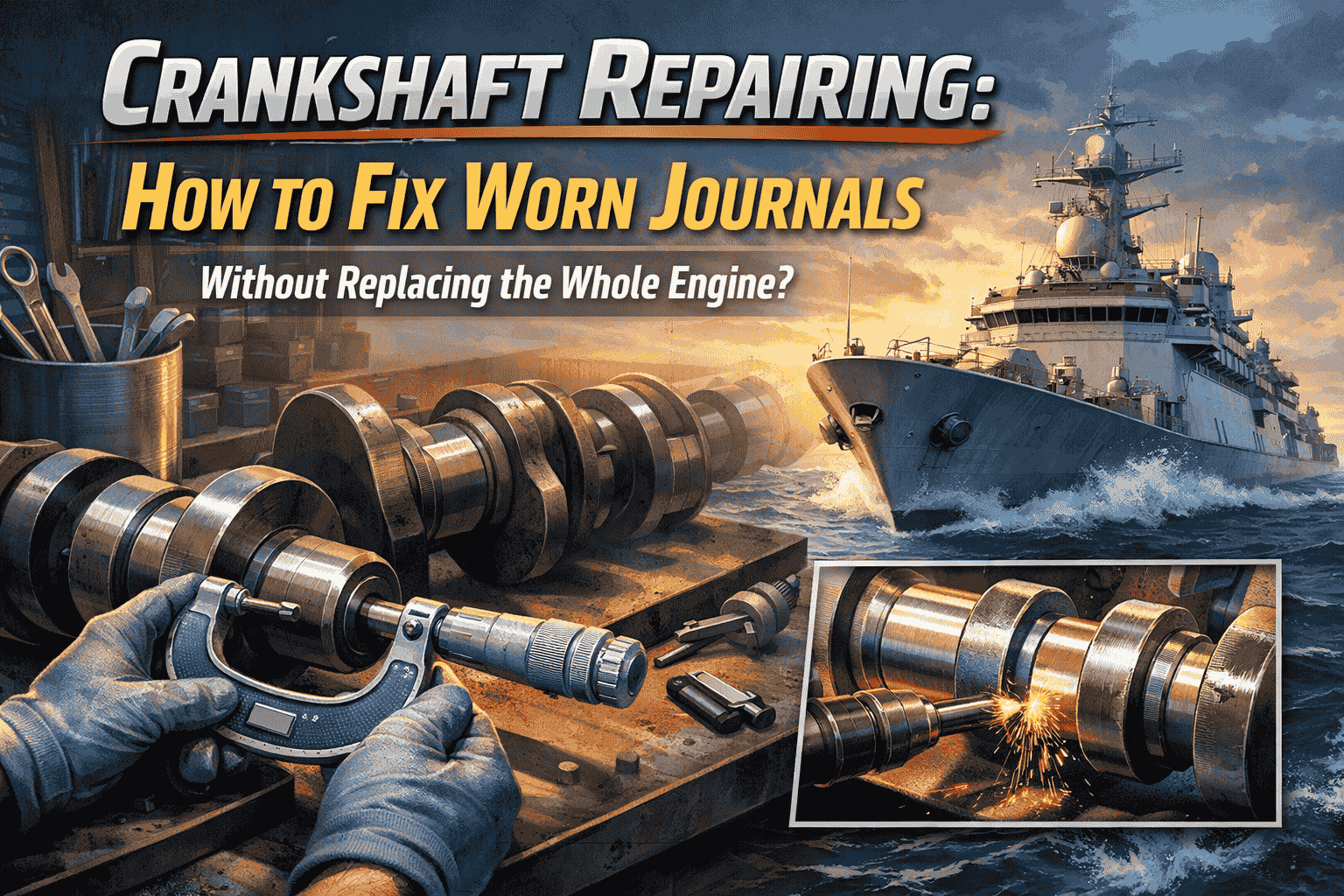
Failure 1: Crankshaft Journal Wear and Scoring
Crankshaft journal failures are a result of poor lubrication or overloading. The very first fatigue cracks start at fillets after long service of thousands of hours. This causes disruption in the operation and also poses dangers to the overall system.
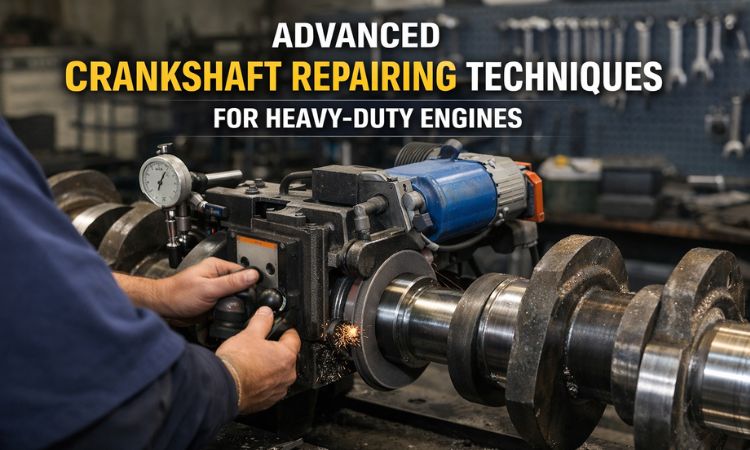
- On-site repair uses portable grinding machines that recondition the journals without removing them from the system.
- Next, the technicians polish and chamfer an oil passage for better flow.
- Finally, they put an oversized bearing fit after grinding.
Failure 2: Cylinder Liner Damage and Wear
Regular scoring or corrosion causes cylinder liners, potentially risking engine seizure. This wear leads to damage, leaking coolant, and power loss.
The on-site repair methods use custom machining tools for honing and relining. The technicians rebuild liners directly on the vessels. This avoids drifting at sea and makes the whole system work flawlessly.
Failure 3: Main Bearing Failure and Seizure
Main bearing failure and seizure can trigger damage on the connecting rods and fires as well. Main bearing failure happens from oil starvation, wrong sizing, and lube oil pressure loss.
The onsite repair technicians replace the bearing and check all the housing issues. They ensure the required Torque wrenches and ensure the proper cruising heights.
Failure 4: Piston Ring and Piston Crown Damage
Poor lubrication in the machine can cause piston rings to wear and be damaged. Furthermore, high heat can cause crown cracks, leading to heavy risks.
The onsite technicians first remove the piston, clean the cylinder honing, and install the new rings by using expanders. This restores the seal without full teardown of the marine engine, saving costs and time.
Failure 5: Camshaft Wear and Lobe Damage
Camshaft bearings happen due to debris or low oil. This causes knocks and misfires, and lobe damage disrupts timing.
On-site inspection spots metal shavings and replaces the old, faulty parts with quality equipment. Next, regularly changing oil prevents such damage.
Failure 6: Connecting Rod and Big End Bearing Failures
The bearing seizure also causes connecting rod failures. These fractures are in the bolts that are under heavy loads. But what happens at the root? The big end bearings overheat due to common oil issues and turn into big troubles.
The onsite engineers straightens the damaged rods and installs new bearings with gap gauges. They ensure the alignment and balance among the parts, resulting in proper system operation.
Failure 7: Fuel Injection System Malfunctions
Clogging is a common issue in marine engines. When dirty fuel or water flows, it often clogs the fuel injectors and causes tougher starts and power losses. Additionally, timing errors worsen it and cause heavy troubles to marine workers.
Onsite technicians clean or replace the whole injector tools. They also install a fuel filter swap to fix contamination.
Failure 8: Turbocharger Bearing and Rotor Damage
Regular oil starvation causes turbo bearing failure and damaged rotors. This reduces the boosts and efficiency of the engine, causing further damage and increases faults.
On-site bearing pulls the bearing and checks the system before restoring the function.
Failure 9: Cylinder Head Cracks and Valve Seat Damage
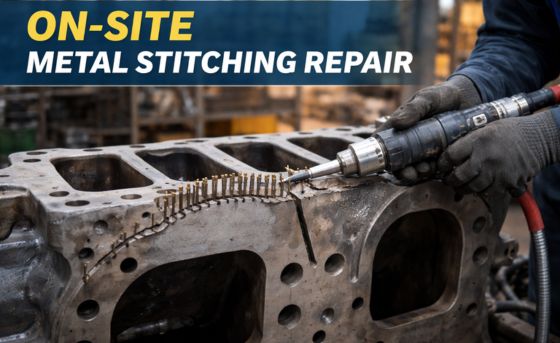
Marine workers often face cylinder head cracks and valve seat damage. This happens due to poor seating and overheating. The results? Worsening operations and damaged parts are causing malfunctioning.
On-site repairs uses laser cladding on the surface and bonds the new material without removing the whole marine engine.
Failure 10: Flywheel and Coupling Alignment Issues
Misalignment in the flywheel and coupling causes vibrations and wear, resulting in troubled functioning and major failure risks. On-site repair of marine and industrial engines uses realigning tools on-site and balances the system. This reduces stress on the system and makes it safer for everyone.
—Add an Image—–
Advanced Onsite Repair Technologies and Equipment:
Here are some of the advanced onsite repair technologies:
- Robotic laser cladding
- 3D printing
- Wire Arc Additive Manufacturing (WAAM)
Tools Used in Onsite Repair:
- Line boring machines support diameters from 300mm to 2500mm.
- Orbital machines perform drilling and tapping.
- Shaft turning machines restore up to 1000mm diameters with stationary-level precision.
- Portable diagnostic gear for factory-floor analysis.
- Laser interferometers for alignment,
- Vibration analyzers,
- Thermal imaging cameras, and
- Coordinate measuring machines
Preventive Maintenance: Avoiding These Common Failures:
- Regularly check bearing failures.
- Keep checking the surface degradation.
- Manage the component fatigue.
- Monitor early signs such as overheating.
- Treat corrosion as soon as you notice it.
- Make sure everything is aligned and balanced.
- Use lubrication for improved marine engine functioning.
- Avoid all operator errors.
- Replace aging parts regularly.
- Change the oil routinely.
- Swap the filters. This prevents 46-49% of issues.
When Onsite Repair Isn’t Enough: Knowing the Limitations:
- In case of severe cracks of damaged components, such as deep scoring, fractures.
- When there are space constraints that limit the equipment access.
- Environmental factors such as dust and humidity have affected the precision.
- When highly skilled technicians are unavailable on-site.
- The damaged components are too large or integrated for effective onsite repair.
- When there is a lack of spare parts availability.
- When the repair requires high precision tolerances beyond onsite capabilities.
- You want to avoid any safety risks in hazardous areas.
Cost Comparison: Onsite Repairs vs Workshop Overhauls:
| Aspect | Onsite Repair | Workshop Overhaul |
| Downtime | 12+ hours | Days/weeks |
| Cost | Lower upfront | Higher but longer life |
| Suitability | Wear, bearings | Major fractures |
Choosing Qualified Services for Onsite Repair of Marine and Industrial Engines:
Are you looking for a reliable and trusted on-site engine repair service provider? Before you select one, you should look for the firms with the factory-trained techs and portable gear, such as MPA Power Project. We have a team of certified engine technicians, specialising in a variety of engine types, and use advanced tools with precision while keeping professionalism and safety as priorities.
Conclusion:
On-site repair is all about maximising uptime through smart repair strategies. This is essential in the marine industry, where risks are heavy, and downtime costs more than just money. On-site repair of marine and industrial engines increases uptime and cuts costs, and reduces failure rates up to 85%. In this blog, we have discussed how on-site repair solves some of the common marine engine failures with precision, ensuring a quick fix, balance, and continued reliable operations. Moreover, while choosing an onsite engine repair service provider, look for firms such as MPA Power Plant that offer reliability, tools proficiency, experience in a variety of engines, etc. However, you must consider the workshop’s overhauling repair in case of severe damage or complete replacement.
FAQs:
- What percentage of marine and industrial engine failures can be repaired onsite?
On-site marine engine repair can cut up to 85% engine faults, such as bearings, liners, misalignments, clogging, fuel engine malfunctioning, etc.
2. How quickly can on-site engine repairs be completed compared to sending parts to a workshop?
On-site repairs generally take as little as 12 hours compared to workshops that usually take days to weeks for repairing.
3. What are the most critical tools needed for on-site marine engine repairs?
Some of the most critical tools for on-site marine engine repair are Torque wrenches, grinders, compression testers, bearing pullers, thermal imaging cameras, orbital machines, Laser interferometers, etc.
4. Can onsite repairs match the quality and durability of workshop overhauls?
Yes, with modern tools such as laser cladding and precise machining, onsite repair can match the quality and durability of workshop overhauls.
5. What is the average cost savings of on-site engine repair versus complete engine replacement?
On-site repair significantly saves up to 40-60% of the costs compared to engine replacement.


No Comments