



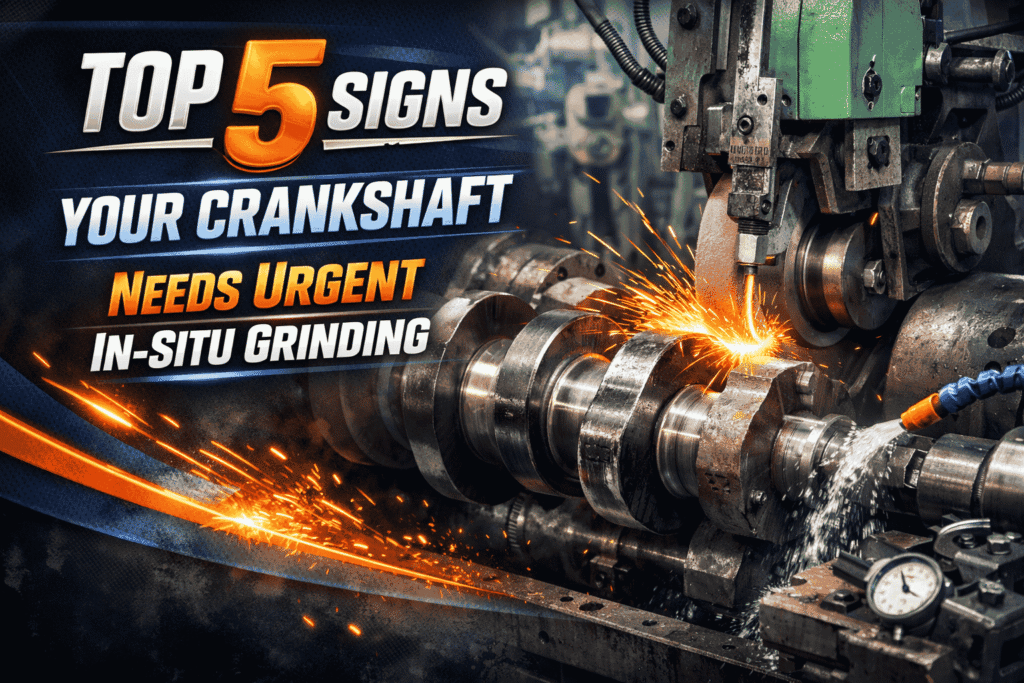
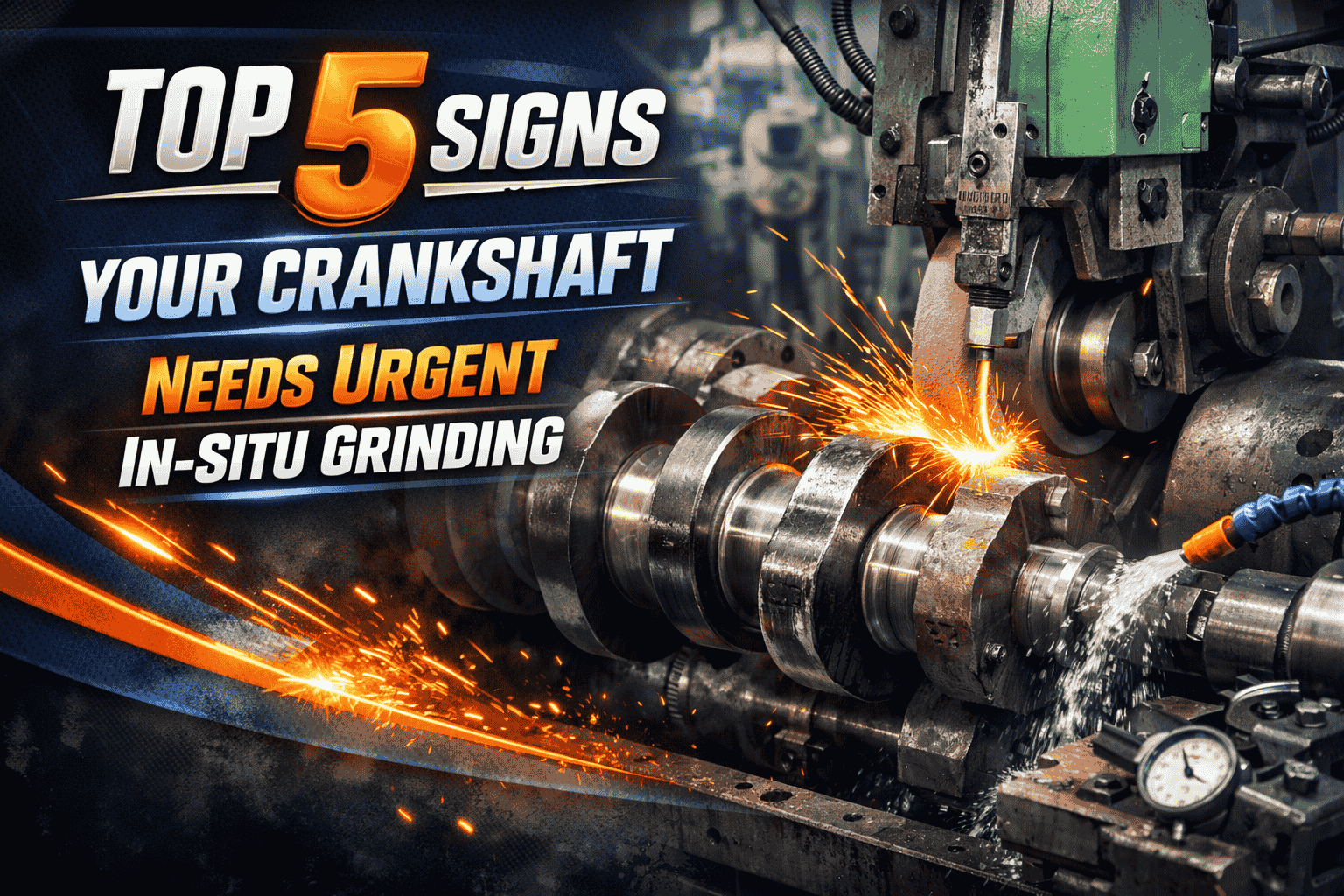
The crankshaft plays a very important role in maintaining the good performance of your engine. However, under constant stress, poor lubrication, and misalignment can cause gradual wear. But if you ignore these warning signals, it might result in severe engine failure. That is when the in-situ grinding process comes into play. In-situ grinding of crankshaft offers an efficient, cost-effective repair solution without dismantling the entire engine.
Sign 1: Excessive Vibrations During Operations:
One of the most common signs of a crankshaft issue that can be visible in the initial days is its excessive vibrations. If you find your vehicle engine vibrating abnormally, especially if it is under load. Then there are high chances that it is because of uneven crankshaft journals or imbalance caused by wear. These excessive vibrations can transfer and travel through the engine blocks, and you might feel the vibrations in the connected machinery.
If you find the engine vibrating consistently, make sure you get this issue fixed. As a persistent vibration in the vehicle can put additional stress on bearings and seals. Thus, accelerating the potential damage. Make sure you get your vehicle immediately inspected. An in-situ grinding of the crankshaft can correct journal irregularities before they escalate.
Sign 2: Unusual Engine Noises (Knocking and Tapping)
If you hear a knocking, tapping, or rumbling noise coming from the engine– DO NOT IGNORE THEM. These sounds often are the result of heavy usage, excessive clearance between the crankshaft journals and bearings due to wear. The moment the crankshaft starts rotating, the improper contact creates a metal-to-metal impact between. That is why you get to listen to abnormal noises.
If you ignore these conditions, they take no time to get worse, which can ultimately lead to the failure of bearings. That is when the in-situ grinding comes into play. In-situ grinding smoothens the damaged journal surfaces and restores proper clearances. Thus, eliminating noise and preventing further harm.
Sign 3: Reduced Engine Power and Performance:
A worn-out crankshaft will directly impact your engine’s efficiency. When the crankshaft journals are damaged, the power transmission automatically becomes inconsistent. Which in turn, leads to reduced torque and sluggish performance. During this time, you will notice delayed acceleration and difficulty handling loads. And sometimes even your vehicle asks for increased fuel consumption. These drops in performance standards are not something you should ignore. These are the signs that indicate that internal components are no longer working in harmony.
Opting for a timely in-situ grinding not only helps in restoring the balance but also the alignment. Thus, allowing the engine to regain its optimal power output.
Sign 4: Oil Pressure Fluctuation and Contamination:
Having a stable oil pressure is quite essential to maintain the good health of your vehicle’s engine. However, if the crankshaft of your engine is worn out, the oil pressure might start fluctuating. Why? It is all because of increased bearing clearance. Plus, in severe cases, even the metal particles from the worn-out journals contaminate the engine oil. Which is quite visible during the oil changes or filter inspection. Such contaminated oil accelerates the wear of the crankshaft and other engine components. Using the in-situ grinding in such a situation not only helps in repairing the crankshaft but also helps stabilise oil pressure. Thus, as a result improves the lubrication efficiency.
Signs 5: Visible Scoring or Pitting on Crankshaft Journals:
If the inspection of your engine reveals that there is visible scoring, scratches, or pitting on crankshaft journals. It is a red signal and urgent action is required. These are the surface defects that substantially reduce load-bearing capacity and increase friction. If you ignore these signs, there are high chances that your vehicle can go through a bearing seizure or complete crankshaft failure.
This is where you need the help of in-situ grinding. In-situ grinding of the crankshaft removes all the damaged layers, restoring a smooth and round journal surface. That too, without even removing the crankshaft from the engine block.
Why In-situ Grinding Beats Full Disassembly?
Traditionally, the crankshaft repairs were all about changing the entire thing, a complete engine disassembly. It involved transportation to a workshop, and along downtime. However, the modern in-situ grinding offers several advantages. It has significantly reduced the down-time of repairing. It has lowered the labour and transportation costs, and also minimised operational disruption. If we talk about marine engines, power plants, and heavy machinery. The in-situ grinding is often the most practical and economical solution.
When to Call a Professional For Urgent Services?
The moment you notice any of the above-mentioned 5 signs, you know the matter is serious. It is very crucial to consult an experienced professional at the earliest. If you keep on delaying the repair session, it can multiply costs and risk total engine failure. An experienced technician usually uses specialised equipment to perform precision in-situ grinding of the crankshaft. Thus, ensuring there is correct tolerance and finishing of the surface. Intervening in the early stages not only extends engine life but also prevents unexpected breakdowns during critical operations.
Conclusion:
If your crankshaft is getting damaged, you will know it. Crankshaft damage starts showing its red signal in the early stages of damage. Addressing them properly with in-situ grinding of the crankshaft can not only help you prevent major engine failures. But also reduces downtime and saves repair costs. Thus, making sure there is long-term engine reliability and performance.
FAQs:
- What is in-situ crankshaft grinding?
The in-situ grinding is a crankshaft repairing process. Where the worn out crankshafts’ journals are ground and polished on-site without even removing the crankshaft from the engine.
- How much does crankshaft grinding cost?
The cost of the in-situ grinding process depends on the type and size of your engine, what is the extent of damage, and the location. However, if we talk generally, in-situ grinding is far more affordable than full engine disassembly.
- Can I drive with crankshaft wear symptoms?
Driving with a damaged crankshaft is quite risky. As it can quickly lead to bearing failure or a complete engine breakdown.
- How long does in-situ grinding take?
Most of the time, an in-situ grinding process is completed within a few days. The in-situ grinding processes are significantly faster than traditional repair methods.
- What causes crankshaft damage in engines?
Some of the most common causes include poor lubrication, contaminated oil, overloading, misalignment, and prolonged operation under high stress.




No Comments