



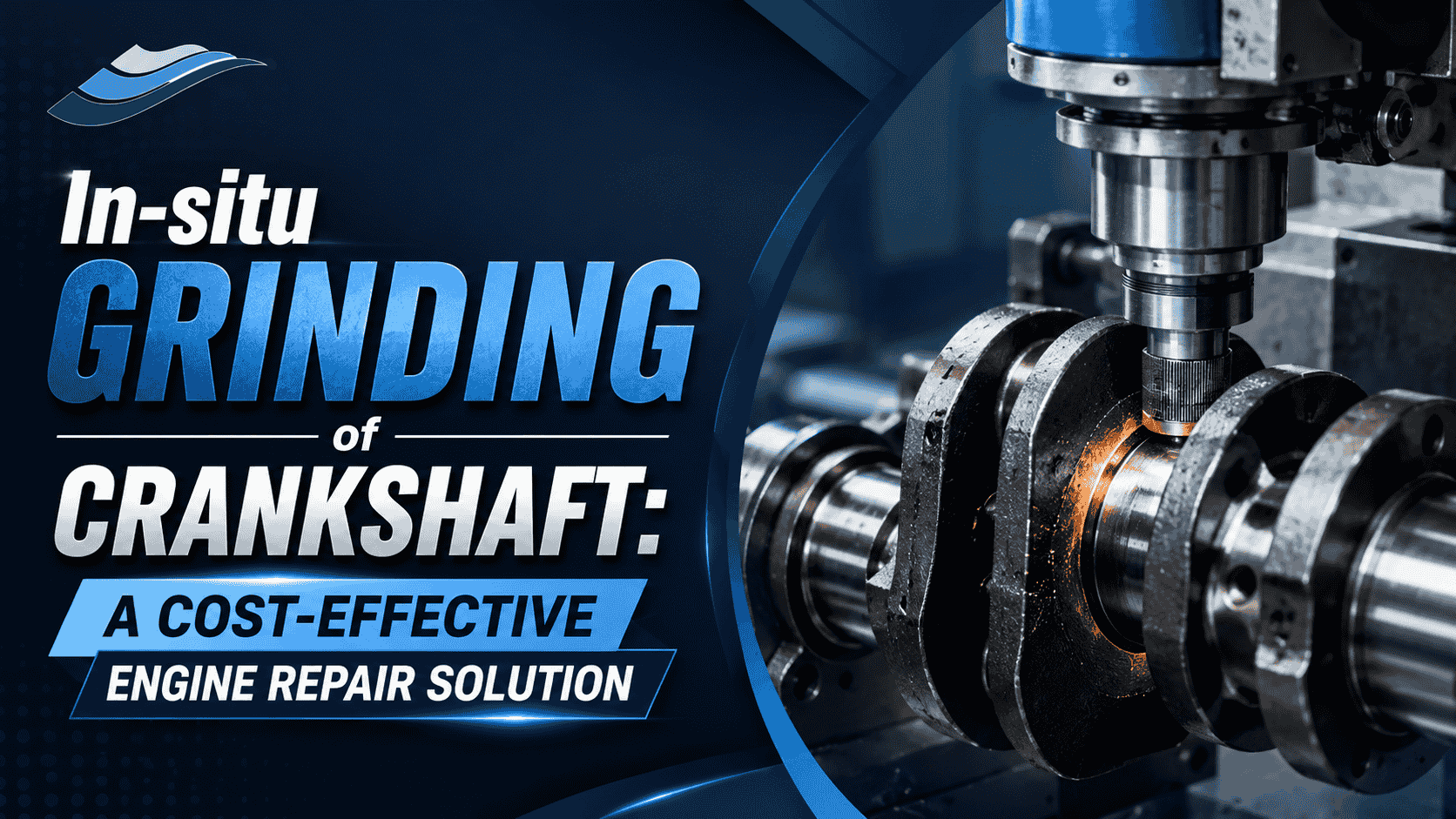
06 Jul In-situ Grinding of Crankshaft: A Cost-Effective Engine Repair Solution
The Crankshaft is the heart of any diesel engine. It uses the up-and-down movement of the pistons to power the engine. Since these are responsible for generating the engine power, they are heavily important for all heavy-duty industries such as:
- Marine engine
- Power plant generator
- Heavy industrial machines, etc.
They can easily sustain the damage and stop the operations completely. This can affect your productivity, delays your projects, and may cause huge losses too.
Earlier, you needed to remove the engine completely, dismantle the components, transport the crankshaft to a specialised workshop and then reinstall it after the repair. This process often takes several days or even weeks.
But there is another option today: CRANKSHAFT IN-SITU REPAIR GRINDING.
What is In-situ Crankshaft Grinding?
In-situ crankshaft grinding is a special repairing method that doesn’t require you to remove the crankshaft journals from the engine and repair them. The process uses a mobile and precise repair and polishing tool, offering 10-25 μm tolerance and OEM-guided RA surface quality.
The in-situ crankshaft grinding generally repairs:
- Journals
- Damaged Surface
- Ovality
- Taper
- Bearing damage
- Minor surface imperfections
Modern in-situ crankshaft grinding machines use advanced tools such as:
- Laser trackers
- Digital measuring
- Precision gauges
- Adaptive process
- Acoustic emission
- Carbon fibres portable, etc.
In-situ Grinding vs Conventional Workshop Grinding:
| Feature | In-situ Crankshaft Grinding | Conventional Workshop Grinding |
| Crankshaft removal | Not required | Required |
| Engine dismantling | Minimal | Extensive |
| Transportation | No | Yes |
| Downtime | Low | High |
| Labour cost | Low | High |
| Risk of Damages | Low | High |
| Suitable for Marines | Yes | No |
Why is In-situ Crankshaft Grinding a Cost-Effective Solution?
Here are some of the best reasons why in-situ crankshaft grinding is a better choice.
- Reduces the Costs:
The traditional repair needs dismantling, transportation, and the reinstall of the whole engine. This needs skilled labour and is expensive.
In-situ grinding saves all these extra money.
- Reduces Engine Downtime
In industries, downtime is often equal to losses. For example:
- Marine industries
- Manufacturing industries
- Mining companies
- Power generation
In-situ crankshaft grinding repair reduces the repair time and helps you resume your business faster and more effectively.
- Lower Labour Requirements
The traditional repair system is a complex process. Plus, you need multiple skilled labourers and teams to complete the whole process, such as:
- Dismantling
- Transportation
- Machining
- Reassembling
On the other hand, on-site needs fewer workers and uses simple portable tools. Less workforce means fewer expenses.
- Prevents Additional Damage
Transporting engines and crankshafts is risky. A small mistake can damage the engine even more. On-site repair eliminates all those risks and saves your money too.
- Scratches
- Misalignment
- Bearing damage
- Handling impacts
These are some of the common risks with transporting your engine.
- Faster Turnaround Time
Traditional repair takes from a few weeks to a month. On the other hand, in-situ crankshaft grinding takes only a few days for complete repair and restart of the process.
The In-situ Grinding Process Step by Step:
Here is the step-by-step procedure of a professional in-situ grinding process.
- Initial Inspection
First, the technicians inspect the engines and examine the crankshaft journals for any of these:
- Wear patterns
- Overheating
- Cracks
- Scoring
- Lubrication
They first find the root cause of the damage before repairing.
- Journal Measurement
Then, the technicians measure each journal with precision using modern equipment like micrometres, dial gauges, and digital measuring. They inspect:
- Diameter
- Ovality
- Taper
- Surface finish
- Runout
This helps them with accurate measurement and makes the right grinding procedure.
- Surface Defect Analysis
Next, technicians look for any of the following surface damage:
- Bearing marks
- Metal transfer
- Deep grooves
- Cracks
- Corrosion
- Fatigue damage
This helps you decide if you need additional repairs or not.
- Precision Grinding
Next, the technicians mount the grinding tool directly onto the crankshaft and repair the journals while also maintaining the following:
- Correct diameter
- Proper roundness
- Accurate geometry
- Manufacturer tolerance
You must inspect multiple times to ensure the grind and repair.
- Polishing
After the grinding, you need to polish the journal surface. It is to get the OEM-required surface roughness. This process helps with:
- Lubrication
- Bearing life
- Oil film stability
- Wear resistance
- Final Inspection
Lastly, the technicians verify these before putting the engine into operation.
- Dimensions
- Surface finish
- Alignment
- Bearing clearance
- Concentricity
Then, they test the engine for smooth operation.
Industries That Benefit from Crankshaft Grinding Repair:
Here are some of the top industries that need crankshaft grinding repair:
- Marine Industry: They need continuous engine operations and minimal downtime in case of any damages.
- Power Generation Plants: Diesel generators need to work continuously in power plants and as backup power systems. On-site repair means reliable supply and minimal maintenance.
- Oil and Gas Industry: Transporting heavy crankshafts can be very expensive. In-situ grinding repairs the engine journal on-site, saving money and time.
- Heavy Manufacturing: Heavy manufacturing units need on-site repair to minimise downtime. For example, steel plants or cement factories.
- Construction Equipment: Construction equipment benefits from on-site repair to reduce cost and downtime, especially when they work in any remote area.
Signs That Tell Your Crankshaft Needs Grinding:
Always look for these warning signs from your engines:
- High engine vibrations
- Knocking-like sounds.
- Less oil pressure
- Overheated bearing
- Metals in lubricating oil
- Journal scoring
- Increased fuel consumptions
- Low engine efficiency
- Bearing failures
- Uneven journal wear
Why Choose MPA Power Project?
A proper repair is essential for running your heavy-duty machinery and running it for long-time. You need professionals who use modern tools and achieve precise grinding [10-25 μm] tolerance. MPA Power Project offers you that and provides:
- Experienced technicians
- Advanced grinding machines
- Precise repair
- High-quality finishing
- Fast response
- Less downtime
- Documentation
- OEM standard repair
- Custom solutions for industries.
We repair with precision, safety, and for long-term performance.
Conclusion:
Traditional crankshaft repair requires you to remove the engine completely and transport it to a workshop. This is expensive, takes more time, and needs multiple teams. In-situ crankshaft grinding, on the other hand, offers a quick, on-site, and affordable alternative.
It saves your money on transportation, labour, and operational cost and also reduces your downtime. Modern on-site crankshaft grinding repair offers precise servicing and fixes regular minor issues such as vibration, journal damages, and crankshaft wear, etc.
But note-
Always connect with professionals like MPA Power Project that offers you expert on-site inspection, repair services, and gives you precise OEM-instructed results.
FAQs:
- What is in-situ crankshaft grinding?
It is a process of repairing the engine crankshaft that allows you to repair the damage on-site with very little repair time.
- How much time does in-situ grinding save compared to crankshaft removal?
It depends on the engine size and the damage. On average, it takes only a few days.
- Is in-situ grinding suitable for all engine sizes?
It is mostly used for medium and large marine engines where removing the crankshafts is expensive and difficult as well.
- How do I know if my crankshaft needs grinding?
Look for common signs such as vibration, knocking, low oil pressure, worn journals, bearing damages, and metal in lubricating oil, etc.
- Does in-situ grinding affect engine performance after repair?
No. Modern in-situ crankshaft grinding repair is as effective as a workshop, so it doesn’t affect the engine performance at all.
No Comments