



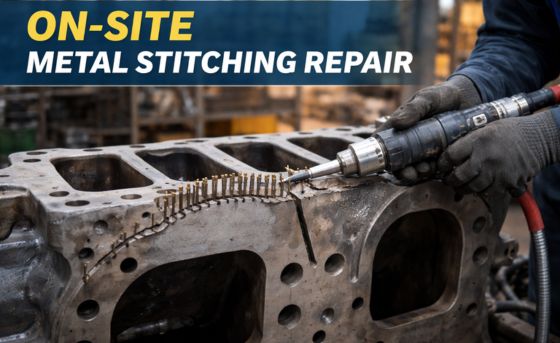
Cracks in the cast iron machine is a common and dangerous issue. Since, industrial factories often become risky, it may harm any worker and if not, halt the production and cause significant losses for sure.
One of the common solutions is to remove the whole machine and send the component for repair. But what about the production losses, delivery time, and extra expenses? Here comes the on-site metal stitching repair procedure that offers a safe and reliable solution to damages.
If you’re going through damage in your factory, on-site repair methods can help you save your money, time, and often help you avoid risks by all means. In this blog, we will discuss everything you should know about on-site metal stitching.
The Problem with Cracked Cast Iron: Why Traditional Welding Often Fails?
Here are some of the reasons why traditional welding often fails with cracked cast iron components:
Cast iron is a brittle metal and is extremely difficult to repair.
Traditional welding involves high temperature and this often weakens the structure.
Cracks are a common issue after traditional welding. This makes it difficult to repair.
Traditional welding requires dismantling the whole machine. This is time consuming and expensive as well.
What is On-Site Metal Stitching Repair? A Process Overview:
Metal stitching repair is a cold mechanical process to fix the cracks in the cast iron. It first drills the holes alongside the cracks and inserts the metal keys to bind the pieces together. This process avoids the heat that is very common in welding procedures and often gives stronger results.
Metal stitching repair is a more stable and durable solution than traditional welding. It is a technique that allows you to repair cracked or damaged metal parts without replacing or dismantling them. It is most commonly used to repair cast iron components.
Traditional metal stitching repair processes are more likely to cause damage during machine transportation. On-site repairs involve inspecting the cracked area and then properly repairing it.
How Metal Stitching Works on Cast Iron - Step-by-Step Method?
Follow the steps given below to apply metal stitching on cast iron components:
Step 1: The first step in the process is to inspect the cracked area.
Step 2: During the machine inspection, the technician properly inspects the direction and length of the crack.
Step 3: Precise holes are then drilled around the crack.
Step 4: Special metal locks are then inserted into the holes. These securely hold the two parts of the crack together.
Step 5: Finally, stitch the pins in the metal locks. This makes the whole process easier and reduces downtime.
Key Benefits of Metal Stitching Repair over Welding:
Here are the key benefits of Metal Stitching Repair over welding:
- The metal stitching repair process doesn’t use Heat.
- This process maintains the original structure and strength of the metal.
- Metal stitching is a safer method for brittle metals like cast iron.
- This process eliminates the need to dismantle machinery; instead, you can repair it on-site.
- On-site repair reduces downtime.
- The metal stitching repair process provides a more durable repair than welding. It lasts longer.
- This process often makes the repaired area as strong as the original metal.
- It is a cost-effective solution. Being an on-site repair process saves you transportation costs.
Industries and Applications: Where Cast Iron Metal Stitching Is Used?
Here are the industries and applications where Iron Metal Stitching is used:
Marine Industry
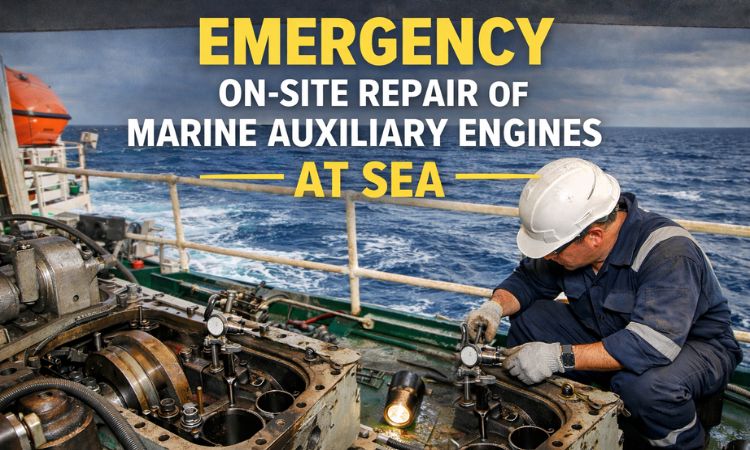
The marine industry has several machines that can easily develop the cracks such as ship engine blocks and cylinder heads. Metal stitching can be very helpful in such cases.
Power Plants
Heavy machinery in power plants has large cast-iron parts. If they develop cracks, metal stitching is used to repair them.
Automobile Industry
Metal stitching is used to repair cracks in the engine blocks or gearboxes of trucks, buses, and heavy vehicles.
Heavy Engineering Industry
Metal stitching works wonders in industries where people often deal with heavy machineries such as press machines, milling machines, and industrial engines.
Cement and Steel Plants
Metal Stitching serves as a reliable repair method for addressing defects in the cast-iron components of heavy machinery within the cement and steel industries.
Cast Iron Metal Stit
When Should You Choose Onsite Metal Stitching?
On-site metal stitching allows you to repair a machine or a component without dismantling it completely. This directly saves your time, efforts, and money. But the question is when to choose On-Site metal stitching at all?
Here are the situations where you should choose Onsite Metal Stitching:
If a machine is super heavy and removing it is highly difficult or costly, onsite repair is your best choice.
When a machine stops production, it causes significant losses. Choose on-site repair in such conditions for a quick and inexpensive solution.
Traditional welding often weakens or damages the cast iron. If that has become common with your machines, you should try metal stitching as a safer alternative.
When your machine needs quick repair and you want to resume the production as soon as possible.
In case of complex machinery systems, choosing on-site repair is probably the best option.
How Long Does a Metal Stitching Repair Last?
Though the metal stitching repair last long, the lifespan of such repair depends on several factors as given below:
- Crack Location and Size
If the crack in a machine or part is small, the repair lasts longer. Even larger cracks can yield good results with the right technique.
- Repair Quality
The durability of metal stitching depends on the quality of the repair. Performing the repair by an experienced engineer increases both its strength and lifespan.
- Machine Usage
Operating a machine under heavy load can affect the repair. Generally, machines with normal load function for longer time.
- Proper Maintenance
Regular maintenance can help the machine function for many years. When properly cared for, the metal stitching repair can last 10-15 years or even longer.
Conclusion:
The demand for metal stitching repair is increasing in the modern industry. Cracks in cast iron components are difficult to repair. Therefore, the metal stitching process preserves their original structure without using heat. This prevents production losses and reduces downtime.
On-site metal stitching repair processes are used in industries ranging from the marine industry to mining, cement, and manufacturing. This helps restart production quickly instead of requiring extended halts. It is a safe and reliable technique that you may prefer for metal stitching repair.
FAQs:
Q1. What is metal stitching repair, and how does it work on cast iron?
Metal stitching repair is a technique that is used to repair the cracks and damaged industrial components on-site. Metal stitching repair is a technique used to repair cracked or damaged metal parts. It is used to repair cast iron components. When working on cast iron, you first must clean the area, tap the alloy keys perpendicularly and lock them to restore the strength.
Q2. Is metal stitching repair permanent or a temporary fix?
Metal stitching repair provides a permanent solution. It safely repairs cracks. It provides a permanent fix instead of replacing damaged equipment.
Q3. Can metal stitching be done without removing the machinery?
Yes, metal stitching can be done without removing the machinery. This saves you costs and transportation expenses.
Q4. How is metal stitching different from welding for cast iron repair?
Metal stitching is a cold repair technique that does not use heat. On the contrary, heat is necessary for welding.
Q5. What types of cracks or damage can be repaired using metal stitching?
Metal stitching generally covers structural cracks, fractures, and damaged sections in cast iron components.


No Comments