



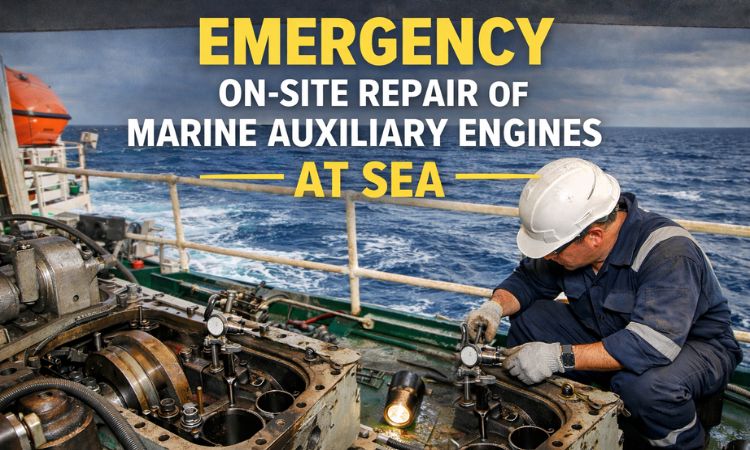
A ship’s operation requires numerous essential systems and equipment, such as the propulsion system, navigation equipment, and control systems. This facilitates the operation of power supplies, pump systems, and cooling systems. The auxiliary engine is a vital component of a ship. A sudden failure can disrupt vital systems, making it difficult to operate.
Taking an auxiliary engine to a workshop for repair while at sea can be quite challenging. In this situation, you can seek the help of an on-site repair of a machine auxiliary engine that provides immediate solutions, and technicians use modern techniques to repair the engine. Results? The execution saves time and costs and restores normal ship operation.
What is the On-Site Repair of a Marine Auxiliary Engine?
On-site repair means repairing a ship’s auxiliary engine at the location where the ship is located. Sometimes, a ship is at sea, and an engine suddenly develops a problem. Transporting the engine to a larger workshop is difficult. Therefore, engineers or technicians repair the engine onboard.
The auxiliary engine helps supply power to the ship. It also helps operate other machines on board. Its failure adversely affects the ship’s pump system and cooling system, requiring immediate repair.
Common Causes of Auxiliary Engine Breakdown at Sea:
The engine operates continuously at sea. It is under tremendous pressure. The harsh conditions increase the likelihood of its failure.
Here are the common causes of auxiliary engine breakdown at sea:
- During ship operation, the engine often runs low on oil. Lack of sufficient oil leads to increased crankshaft wear.
- Sometimes, the engine overheats, causing bearing wear.
- This overheating can then lead to engine failure.
- Problems with the engine’s fuel system can damage the crankshaft. This can cause the engine to malfunction and sometimes even shut down.
Key Components Repaired On Site:
In On Site Repair of Marine Auxiliary Engine, engineers repair some of the engine’s most important parts. The three most important are the crankshaft, cylinder head, and bearings.
Crankshaft
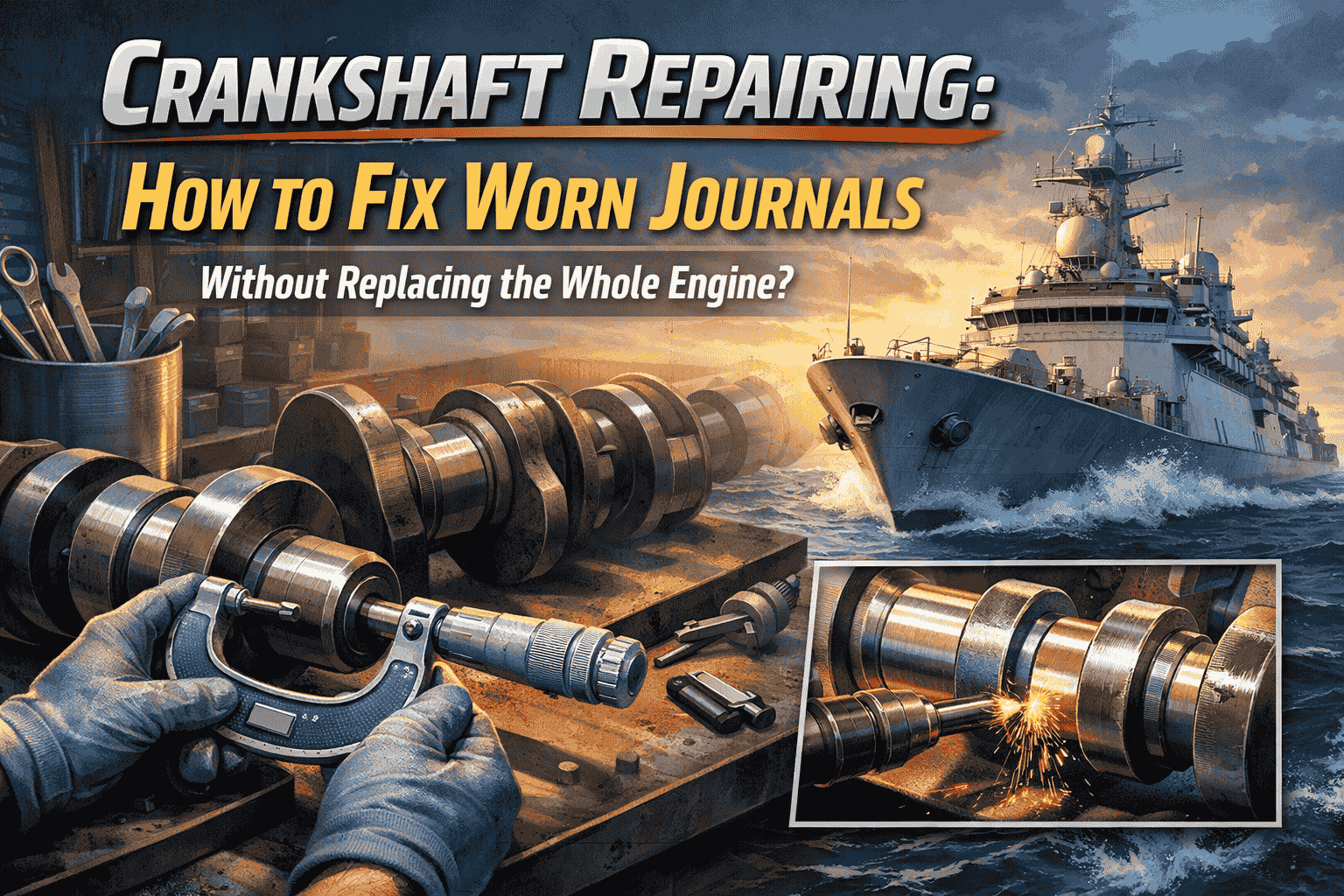
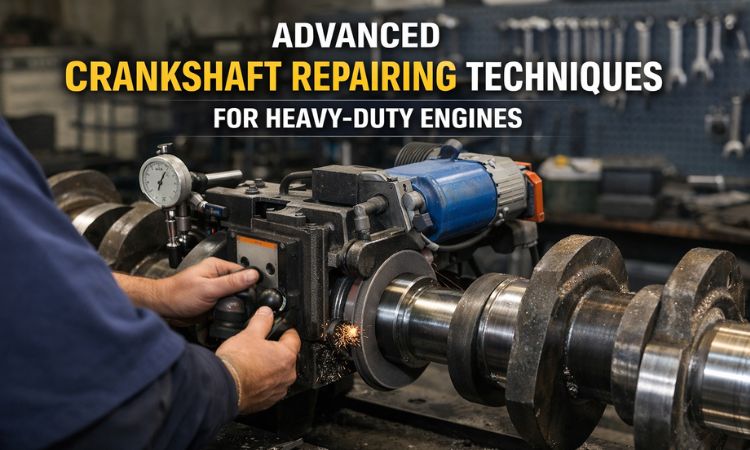
The crankshaft is one of the most important components of an auxiliary engine. It converts the piston’s up-and-down movement into rotational movement. If it wears out, the engine will not run properly. Engineers use appropriate grinding technology to repair it.
Cylinder Head
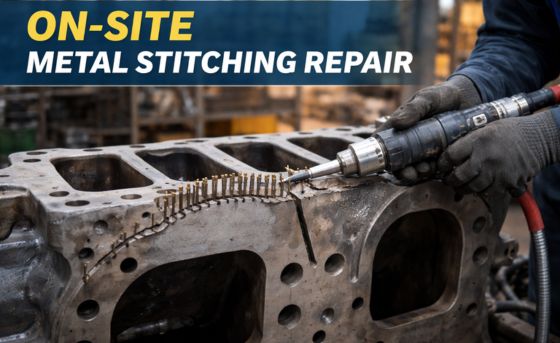
The cylinder head is located on top of the engine. It helps in the combustion process during ship operation. Sometimes carbon deposits accumulate in it, and it may also develop slight cracks. In these conditions, the ship becomes difficult to operate. Technicians perform on-site repairs during these times.
Bearings
Bearings support the engine’s rotating parts. When worn, the engine begins to make noise. Replacing them can restart the engine.
Tools and Equipment Required for On-Site Marine Engine Repair
On Site Repair of Marine Auxiliary Engine requires certain tools and equipment. This allows for easy on-site repairs. This saves time and reduces costs.
Here are the tools and equipments required for On-site Marine Engine Repair–
- Grinding machine
- Alignment tools
- Measuring tools such as a micrometer
- Hydraulic tools
- Welding machine
- Cleaning tools
These tools are used by engineers to check and repair the engine. This also allows you to determine which part of the engine is defective or damaged.
Step-by-Step Process of Emergency On-Site Repair at Sea:
Emergency on-site repair is a process that is carefully carried out in a very systematic manner. In this process, you can repair the engine on-site with the help of a technician or engineer.
Here is a step-by-step process of emergency on-site repair at sea:
Step 1: Initial Inspection
For emergency on-site repair at sea, the engineer/author technician first inspects the engine thoroughly. This helps them identify the actual problem.
Step 2: Technical Testing and Measurement
After this, the necessary tools and equipment are required for measurement. This makes on-site repairs easier.
Step 3: Damage Assessment
This process repairs the damaged engine parts. In most cases, the problem is with the engine’s crankshaft, bearing, or cylinder head.
Step 4: On-site Repair of the Damaged Part
Engineers prepare the necessary equipment and portable machines for on-site repairs and repair the damaged parts. This involves in-situ grinding of the crankshaft, repair of the cylinder head, and replacement of the damaged bearing.
Step 5: Engine Reassembly
After onsite repairs are complete, all engine parts are properly assembled. Engineers then ensure that all parts are aligned correctly.
Step 6: Testing and Performance Check
After confirmation, engineers test the engine by starting it and checking its performance. This keeps the engine safe and running properly.
Advantages of On-Site Repair Over Drydock Repair:
On-site repair of Marine Auxiliary Engine are often easier than drydock repairs. Drydock repairs require the vessel to be transported to a port or repair site. This is both time-consuming and cost-effective.
Here are the benefits of on-site repair over drylock repair:
- On-site repair allows you to repair your ship’s auxiliary engines quickly.
- This prevents your ship from being out of service for extended periods, as it is repaired on-site.
- On-site repairs can be cost-effective because there’s no transportation cost.
- In emergencies, solutions are available quickly, and there’s no need to travel anywhere.
When to Call a Professional On-Site Marine Engine Repair Team?
If a major problem is detected with the auxiliary engine, call a professional team. If the engine makes strange noises or experiences excessive vibration, it’s essential to have it repaired immediately. Sometimes, during continuous operation, the engine can overheat, indicating engine failure.
In case of engine failure, you can call in experts to have the engine inspected. New technologies currently in place make the entire on-site repair process easier, preventing major engine damage.
Conclusion:
A failure in a ship’s auxiliary engine can put you in a serious situation. However, timely repairs are challenging, leading to a growing demand for modern on-site repair services. Advanced testing techniques, portable machinery, and in-situ repairs make On Site Repair of Marine Auxiliary Engine easily possible.
Taking your ship to drydock is both time-consuming and costly, delaying its operation and potentially causing significant damage. To avoid this, specialized engineers perform on-site repairs to improve engine performance. This keeps the ship safe and makes operations easier.
FAQ:
Q1. What are the most common auxiliary engine failures that require emergency on-site repair at sea?
Overheating, bearing failure, fuel problems, and crankshaft damage are generally the most common auxiliary engine failures that require immediate repair.
Q2. How long does an on-site repair of a marine auxiliary engine typically take?
The time required for on-site repair of a marine auxiliary engine depends on the problem. Sometimes repairs are completed within a few hours, but major problems can take 1–2 days.
Q3. Can on-site marine engine repair be performed while the vessel is still operational?
Marine engine repairs can be performed on-site while the ship is underway. Sometimes the ship’s other systems remain operational, but in critical situations, the engine must be temporarily shut down.
Q4. What is the cost difference between on-site repair and drydock repair for marine auxiliary engines?
On-site repair is often cheaper than drydock repair. This is because the on-site repair process eliminates the cost of transporting the ship to a drydock.
Q5. Which marine auxiliary engine components can be repaired on-site without complete disassembly?
Crankshafts, bearings, cylinder heads, etc., are marine auxiliary engine components that can be repaired without disassembling the entire engine.


No Comments