




The biggest concern when a problem arises with the rotor shaft in a turbine at a site is the possibility of a prolonged shutdown. This increases operational costs and results in significant losses due to the halt in site work. In the traditional rotor shaft grinding process, dismantling the machine, removing the rotor, and then reassembling it is quite challenging. It is also time-consuming and expensive.
On-site rotor shaft grinding has now become a smart solution that allows you to grind the shaft with a quick setup at the site without dismantling the turbine. This is very helpful in quickly repairing problems such as rotor shaft unevenness or wear. It can be used in industrial turbines and power plants. Here, we will discuss on-site rotor shaft grinding in detail.
An Overview of On-Site Rotor Shaft Grinding:
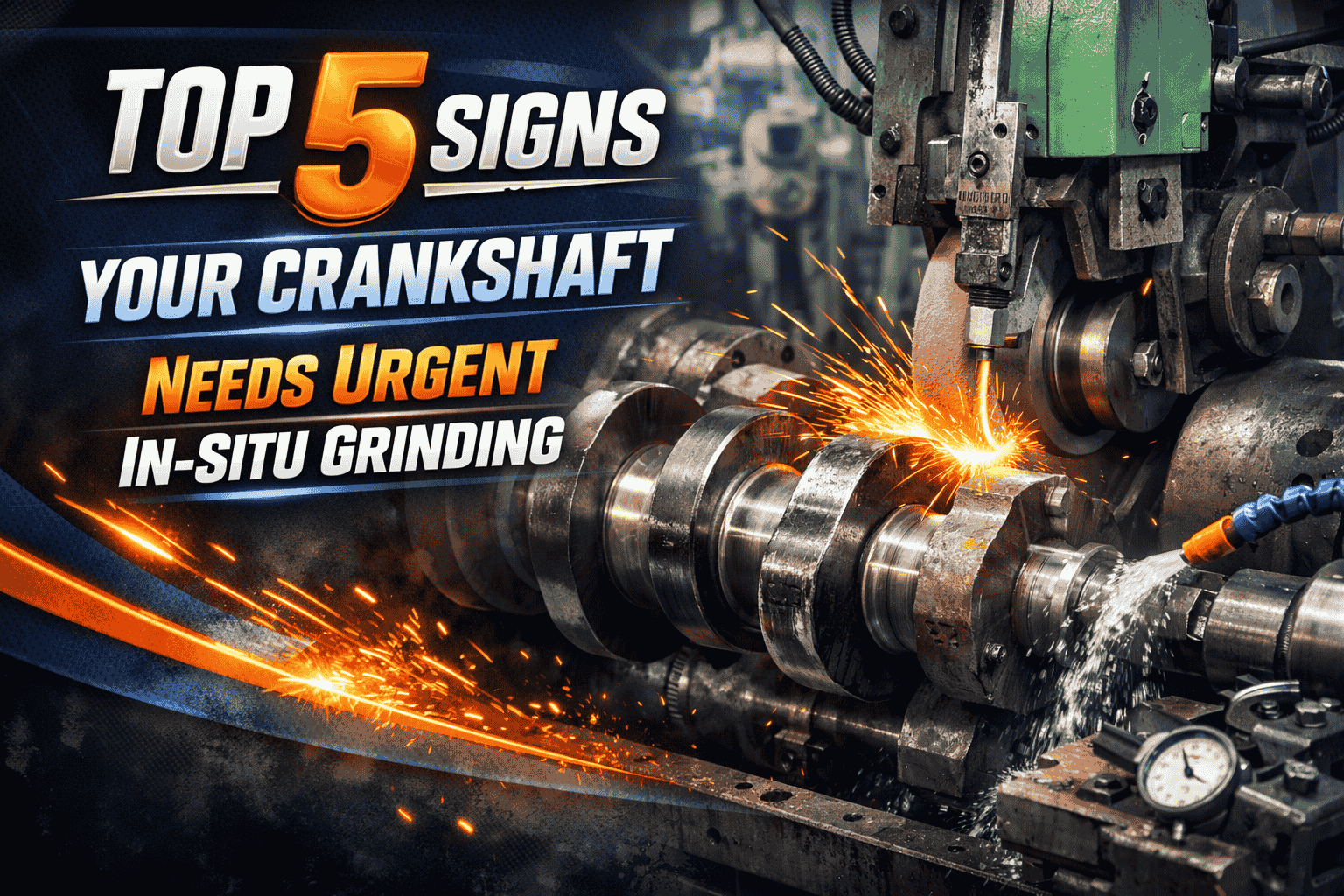
On-site Rotor Shaft Grinding is a process that utilizes portable, high-precision grinding and measuring equipment. We use it to repair rusted or worn rotor shafts on-site. This significantly reduces company downtime.
In the traditional method, you typically remove the turbine’s rotor shaft from a machine, but on-site rotor shaft grinding eliminates the need to remove the turbine’s rotor shaft from the machine. This allows the machine to be brought directly to the site and repaired.
Why Choose Onsite Grinding Over Disassembly?
Disassembly is a process that requires the turbine to be completely dismantled on-site. This increases both time and cost. On-site Rotor Shaft Grinding is a modern grinding technique. This allows us to repair rotor shafts on-site. This eliminates the need for transportation of the rotor shaft from the site to the technician, saving costs.
On-site Rotor Shaft Grinding also reduces the risk of machine damage. This reduces production losses, benefiting the company. Disassembly requires more time, but onsite grinding allows you to restart your plant immediately. This eliminates the need for long waits. It provides an on-site solution.
Key Benefits of Quick Setup for Turbine Rotors:
Quick on-site setup for turbine rotors has many benefits. Installation is easy. Alignment eliminates the need for excessive time. Often, turbine failures require extended downtime due to the need to transport the rotor shaft from the site to the technician. However, on-site grinding provides a quick setup for the rotor shaft.
You can also repair the rotor shaft on-site with on-site grinding and resume your work immediately. This is also the best solution for emergency repairs.
If you are experiencing vibration and misalignment issues with your turbine routers, consider on-site grinding. This increases the turbine’s efficiency over time, rather than reducing it.
Essential Equipment for On-Site Rotor Grinding:
Here is the essential equipment you must use for Onsite Rotor Grinding-
- Portable Grinding Machine
This machine can be easily installed at the machine site. It eliminates the need to disassemble the rotor shaft for grinding.
- Grinding Wheels and Abrasives
High-quality grinding wheels provide a precise finish during on-site rotor shaft grinding. This results in a uniform and smooth shaft surface.
- Alignment Tools (Dial Indicator / Laser Tools)
Alignment tools greatly assist in aligning the machine and the shaft. This helps reduce vibration and misalignment.
- Measuring Instruments
Micrometers and vernier calipers are used for measurements during on-site rotor shaft grinding. This ensures accurate diameter and tolerances.
Step-by-Step Quick Setup Process:
Here are the steps you must follow for quick setup-
Step 1: Initial Inspection and Assessment
First, you should inspect the rotor shaft surface for wear and misalignment. Then, measure the run-out and diameter.
Step 2: Site Preparation and Safety Setup
Next, secure and clean the site. Install all safety barricades and PPE. This ensures safe onsite turbine grinding.
Step 3: Installation of Grinding Equipment
In this process, bring the portable grinding machine to the site. Mount the machine securely onto the rotor shaft.
Step 4: Alignment and Calibration
Now, you have to precisely align the machine and the shaft. Calibration allows you to control the grinding depth.
Step 5: Trial Run and Monitoring
You should perform a trial run. Monitor vibrations and noise. Address any problems immediately.
Step 6: Actual Rotor Shaft Grinding Process
After that, grind the shaft slowly and precisely. Take measurements and perform inspections at each stage.
Step 7: Final Inspection and Quality Check
After grinding, perform a final inspection and measure all quality parameters. This prepares the turbine safely for operation.
Ideal Applications in Turbine Maintenance:
- Correcting rotor shaft wear and scoring in hydro turbines.
- Bearing journal repair in steam turbines.
- Precision grinding of high-speed gas turbine shafts.
- Restoring shaft surfaces after bearing failure.
- Fast repairs during emergency turbine breakdowns.
- Minimizing downtime and avoiding long shutdowns.
- Preventive maintenance to avoid future failures.
- Extending the life of high-value turbine assets.
Safety Protocols and Best Practices:
- Personal Protective Equipment (PPE)
You must use proper personal protective equipment, such as helmets, gloves, and safety shoes.
- Turbine Shutdown and Energy Isolation
You ensure the turbine is in a safe shutdown. It must be isolated from all energy sources.
- Machine Alignment and Secure Mounting
You should always verify correct machine alignment. You can use secure mounting to prevent vibration or movement.
- Continuous Monitoring During Grinding
You should monitor vibration, noise, and temperature on site continuously.
- Qualified and Authorized Personnel
You have to hire only trained, experienced, and authorized personnel to perform on-site rotor grinding.
- Standard Operating Procedures and Final Checks
After completing grinding, you follow standard operating procedures. You should also conduct final safety checks before restarting.
Cost Savings and Downtime Reduction:
On-site rotor shaft grinding offers significant cost savings compared to traditional methods. On-site shaft grinding eliminates transportation costs and the expense of heavy cranes.
Extended machine downtime is actually costly. On-site turbine grinding allows industries to resume operations quickly. The turbine does not need to be disassembled. Quick setup enables immediate on-site repairs, and reduces downtime.
Conclusion:
Today, on-site rotor shaft grinding is a reliable option. It eliminates the need to disassemble the turbine. The quick setup saves you time. This improves turbine performance and reduces downtime. It involves less risk and delivers faster results. There is significant demand for this service in the industrial sector.
MPA Power Project has highly skilled engineers and technicians with over 15 years of experience in industrial engine repair. We specialize in turbine rotor shaft grinding, in-situ grinding, overhaul services, and precision maintenance using advanced portable equipment. We provide you with value-for-money solutions.




No Comments