



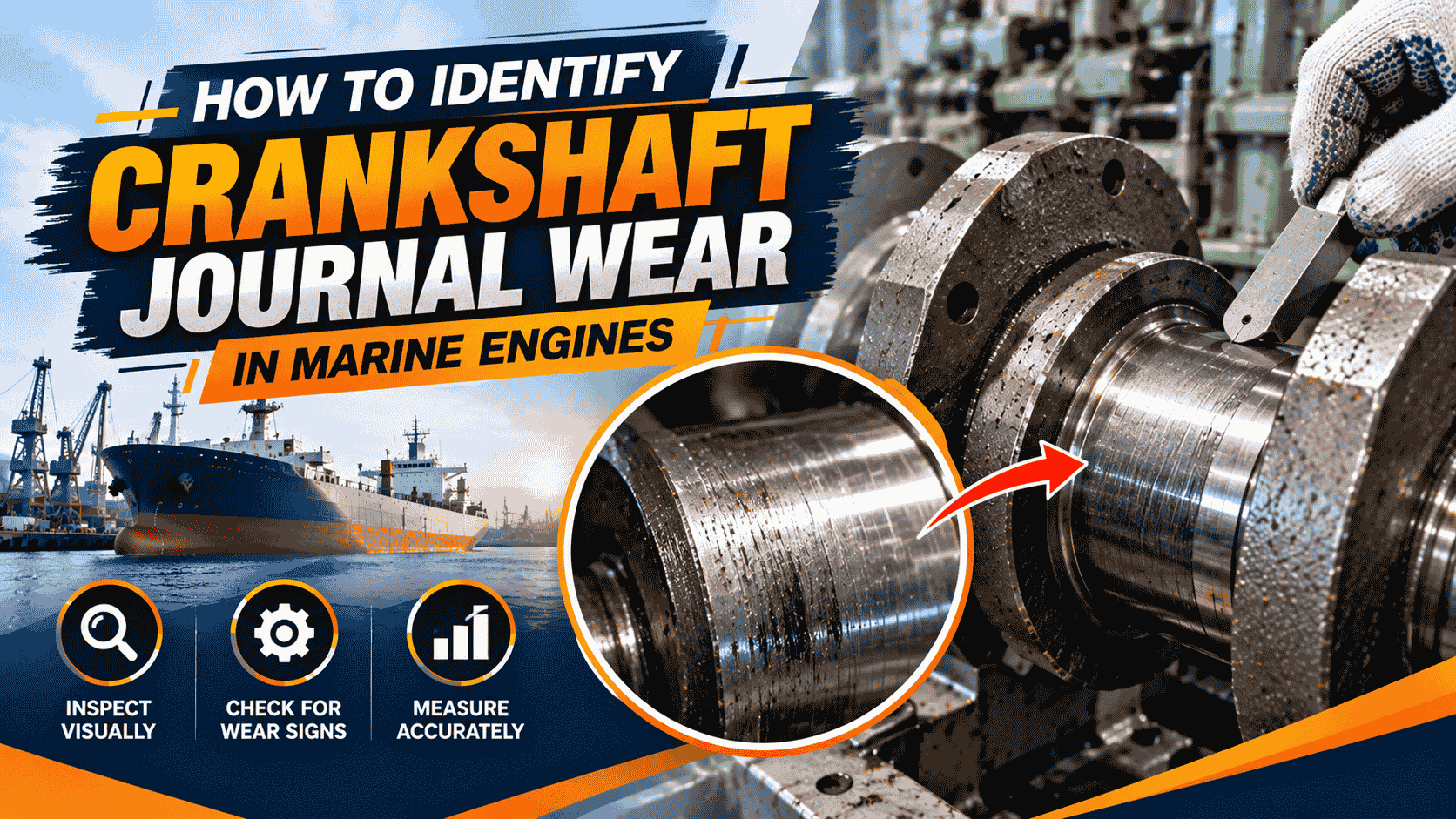
28 Oct How to Identify Crankshaft Journal Wear in Marine Engines
A marine engine can run for thousands of hours without a problem, and then one bearing failure puts the vessel out of service for weeks. In most of these cases, the damage started long before the breakdown. The journals on the crankshaft were wearing slowly, and the early signs were missed or ignored.
At MPA Power Project, our engineers inspect and repair crankshafts on ships, DG sets and industrial engines across India and overseas. In this guide, we share what we look for on board when we suspect journal wear, how the wear is measured, and what to do once you confirm it. The aim is simple: help chief engineers, superintendents and plant teams catch the problem while it is still repairable on site.
What Is a Crankshaft Journal and Why Does It Wear?
A crankshaft has two kinds of journals. The main journals sit in the main bearings and carry the shaft in the engine block. The crankpin journals connect to the connecting rods. Under normal running, each crankshaft journal turns on a thin film of lubricating oil, and the metal surfaces should never touch.
Wear begins when that oil film breaks down or gets contaminated. On marine engines, the common causes are:
- Poor lube oil quality or a blocked oil supply, which leads to metal-to-metal contact
- Abrasive particles in the oil, such as catalytic fines from heavy fuel oil or dirt entering during maintenance
- Misalignment of the crankshaft caused by worn main bearings, hull deflection or a damaged foundation
- Repeated overloading, frequent starts and long periods of low-load running
- Bearing failure that overheats the journal surface
- Torsional vibration problems or a faulty vibration damper
Wear rarely happens evenly. Journals usually become oval (out of round) or tapered (larger at one end than the other), and these shapes are what you need to measure.
Early Warning Signs You Should Not Ignore
Engine crews often notice journal wear through its effects before anyone opens the crankcase. Watch for these signs during routine watchkeeping:
Falling lube oil pressure
As the clearance between the journal and bearing grows, oil escapes more easily and system pressure drops. A gradual fall over weeks, with the pump and filters in good condition, points towards bearing and journal wear.
Rising bearing temperatures
Engines fitted with bearing temperature sensors or an oil mist detector give an early warning. A single bearing running hotter than its neighbours deserves an inspection at the next opportunity.
Knocking or unusual noise
A dull, rhythmic knock that changes with load often comes from excessive clearance at the crankpin or main bearing. By the time it is audible, wear has usually progressed, so do not wait for the noise to get louder.
Changes in lube oil analysis
Regular oil analysis is one of the most reliable early indicators. A rising trend in iron suggests wear of the shaft or other steel parts, while increases in tin, lead, copper or aluminium point to bearing material wearing away. Compare each result with the previous samples rather than looking at one report on its own.
Metal particles in filters
Bright flakes or fine metallic sludge in the lube oil filters or centrifuge are a clear signal that something inside the engine is wearing. Keep a sample and have it analysed to identify the source.
How to Inspect and Measure Journal Wear Step by Step
Warning signs tell you something is wrong. Measurement tells you how bad it is and what repair is needed. Before you start, it helps to follow a structured inspection checklist before crankshaft repair so nothing is missed.
Step 1: Visual inspection
Open the bearing, remove the shells and clean the journal with a lint-free cloth. Look for:
- Scoring or deep scratches running around the circumference
- Blue, brown or straw-coloured patches that show the surface was overheated
- Bearing metal smeared onto the journal
- Pitting, corrosion or fine cracks, especially near the oil holes and fillet radius
Also study the old bearing shells. Wear concentrated on one edge suggests taper or misalignment, while wear on one side suggests ovality or a load problem.
Step 2: Measure ovality and taper
Use a calibrated outside micrometer of the right size. Take readings at three positions along the journal length (near each end and in the middle). At each position, measure in two planes at 90 degrees to each other, usually vertical and horizontal. Record every reading in a table.
- Ovality is the difference between the two readings taken in the same position.
- Taper is the difference between readings taken at the two ends of the journal in the same plane.
Compare the results with the limits in the engine maker’s manual. These limits differ by engine model and size, so never rely on a figure from another engine. If either value is beyond the limit, the journal needs correction.
Step 3: Check bearing clearance
Measure the oil clearance using the method the manual specifies, such as a feeler gauge, lead wire or plastic gauge strip. Clearance above the limit, even with a round journal, means the bearing shells are worn and should be changed. Clearance that is uneven across the bearing points back to journal shape.
Step 4: Take crankshaft deflection readings
Deflection readings with a dial gauge between the crank webs show whether the shaft is bending as it rotates. Abnormal deflection usually comes from worn or uneven main bearings, and if left alone it loads the journals unevenly and speeds up wear. Compare readings with the previous record and with the maker’s limits.
Step 5: Hardness and crack testing
If the journal shows heat discolouration or the bearing has run, test the surface hardness with a portable hardness tester. Overheating can soften or harden the surface layer. Then check for cracks with magnetic particle inspection or dye penetrant testing, focusing on the fillets and oil holes, where cracks most often start. A cracked journal changes the repair decision completely, so this step should never be skipped after a bearing failure.
Reading the Results: Minor, Moderate or Severe Wear
Once the data is recorded, the wear generally falls into one of three groups:
- Minor wear: light scratches, ovality and taper inside the limits. Polishing the journal and fitting new standard bearings is often enough.
- Moderate wear: ovality or taper beyond the limits, scoring that polishing cannot remove. The journal needs grinding to an undersize, with matching undersize bearings.
- Severe damage: deep scoring, cracks, or hardness out of range. A specialist must assess whether the shaft can be ground within its permitted undersize or needs replacement.
For a detailed look at the repair methods for each case, read our crankshaft journal repair complete guide.
Repair Options Without Removing the Engine
Removing a crankshaft from a ship is expensive and slow. It often means cutting openings in the hull or decks and keeping the vessel off hire for a long time. For most cases of moderate wear, in-situ crankshaft grinding is a better choice. A portable grinding machine is mounted on the journal inside the engine, and the journal is machined back to a true round shape and the correct surface finish, all on board.
After grinding, the bearings must suit the new journal size. Where undersize shells are not available, white metal bearings can be rebuilt through rebabbitting of bearing shells and machined to the exact clearance. When the wear is part of a wider engine problem, our marine engine repair services cover alignment, overhauling and the related components in one visit.
Practical Tips to Slow Down Journal Wear
- Follow a fixed lube oil analysis schedule and track trends, not single results.
- Keep purifiers and fine filters in good condition, particularly on engines running heavy fuel oil.
- Record crankshaft deflection at the intervals the maker recommends and after any grounding or dry docking.
- Pre-lubricate the engine before starting, and avoid long periods of very low load where possible.
- Use genuine or approved bearings and tighten bolts to the specified torque.
- Keep every measurement on file so the next inspection has a baseline for comparison.
Frequently Asked Questions
1. How often should crankshaft journals be inspected on a marine engine?
Follow the maintenance intervals in the engine maker’s manual, which are usually tied to running hours. Also inspect after any bearing failure, sudden drop in oil pressure or abnormal oil analysis result.
2. What tool is used to measure journal ovality?
A calibrated outside micrometer is the standard tool. Readings are taken in two planes at 90 degrees and at several points along the journal length.
3. Can a worn journal be repaired on board?
Yes. In most cases of ovality, taper or scoring, in-situ grinding restores the journal on board without removing the crankshaft, saving considerable time and cost.
4. Does oil analysis show journal wear?
It gives a strong indication. Rising iron levels point to steel wear, and rising tin, lead, copper or aluminium point to bearing wear. Physical measurement is still needed to confirm.
5. When does a crankshaft need replacement instead of grinding?
Replacement is considered when cracks cannot be removed within the permitted undersize, when the journal is already at its final undersize, or when the shaft is bent beyond correction.
Conclusion
Identifying crankshaft journal wear early comes down to three habits: watch the warning signs, measure carefully and keep good records. Falling oil pressure, hot bearings, knocking and changes in oil analysis should all lead to a proper inspection with micrometer readings, clearance checks, deflection readings and crack testing. Caught early, most journal wear can be corrected on board in a few days instead of weeks in a shipyard.
MPA Power Project has the portable equipment and experienced engineers to inspect, measure and grind crankshafts on site, for marine and industrial engines alike. If your engine is showing any of the signs above, contact the MPA Power Project team for an inspection and a clear repair plan.
No Comments